You've Been Paying Extra for Antibacterial Soap Since the '90s — The FDA Says It Was Never Worth It
The Soap That Promised More Than Soap
Walk through any American grocery store in the 1990s or early 2000s and the message was everywhere: regular soap cleaned your hands, but antibacterial soap protected your family. It killed germs. It was the responsible choice. It was, the marketing implied, what a careful parent would buy.
The antibacterial soap category grew into a multi-billion dollar segment of the consumer goods market on the back of that promise. Triclosan — the active ingredient in most of these products — showed up in hand soaps, dish soaps, body washes, and eventually in toothpastes, cutting boards, and children's toys.
Then, in September 2016, the U.S. Food and Drug Administration issued a ruling that the antibacterial soap industry had been fighting for years: manufacturers had failed to demonstrate that products containing triclosan were either more effective than plain soap or safe for long-term use. The FDA banned triclosan and 18 related compounds from consumer hand and body wash products.
The announcement received modest news coverage for a day or two. Then life moved on. And somehow, the belief that antibacterial soap is the better, more protective option largely survived the news.
How Triclosan Got Into Everything
Triclosan was first developed in the late 1960s as a surgical scrub for use in hospital settings — an environment where controlling bacterial contamination genuinely matters and where the product is used under clinical supervision. That context is important, because it's a long way from surgical prep to a family bathroom counter.
The ingredient worked its way into consumer products through the 1980s and exploded in the 1990s, a decade when anxieties about germs and food safety were running high. E. coli outbreaks made national headlines. The idea that ordinary household bacteria were a serious threat to family health was easy to sell.
Manufacturers positioned triclosan products not just as equally effective alternatives to regular soap, but as superior ones. The marketing language leaned heavily on clinical-sounding claims: kills 99.9% of bacteria, provides lasting protection, fights germs for hours after washing. These claims sounded scientific. They were also, regulators would eventually determine, not well supported by the kind of rigorous evidence that would satisfy the FDA.
What the Science Actually Found
Here's the part that reframes everything: soap doesn't primarily work by killing bacteria. It works by physically removing them.
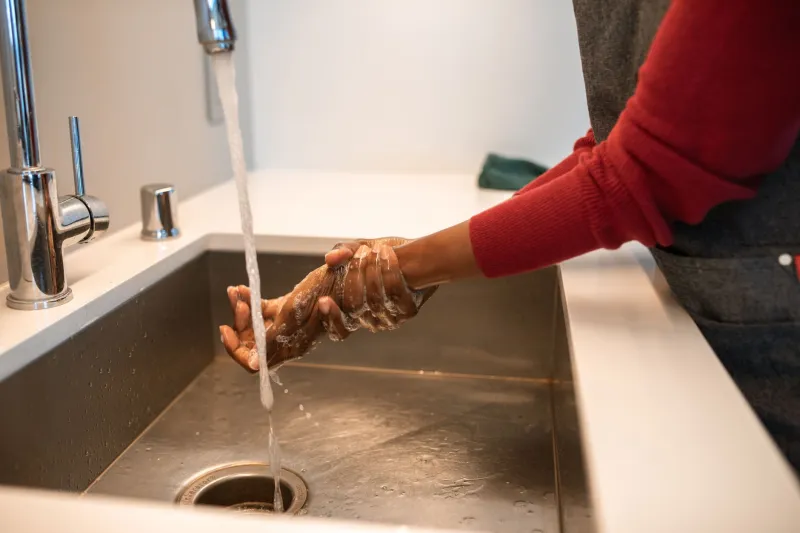
When you wash your hands with soap and water, the soap molecules bind to both water and oil. That action lifts bacteria, viruses, and debris off your skin and suspends them in the water, which then rinses away down the drain. The organisms aren't necessarily destroyed — they're mechanically removed. And that process, performed correctly for at least 20 seconds, is remarkably effective.
For triclosan to offer any additional benefit, it would need to meaningfully improve on that removal process — killing germs that would otherwise survive a proper handwash. Multiple studies found that under real-world conditions, it didn't. A 2007 review published in Clinical Infectious Diseases analyzed the available evidence and found no clear benefit of antibacterial soaps over plain soap for reducing infectious illness in households.
The FDA had actually been reviewing triclosan since 1972 — a review that dragged on for over four decades partly due to industry pushback. When the agency finally issued its ruling in 2016, it noted that manufacturers had been given years to produce evidence that triclosan-based products were both more effective and safe. They couldn't.
The Safety Question Nobody Was Asking in 1995
Effectiveness was only part of the FDA's concern. The agency also flagged potential safety issues that had emerged from animal studies, including evidence that triclosan might interfere with hormone regulation at high doses. Researchers had also raised concerns about whether widespread use of triclosan in consumer products could contribute to antibiotic resistance — essentially training bacteria to become harder to kill over time.
None of this means that a lifetime of using antibacterial hand soap is a documented health catastrophe. The animal studies involved exposure levels higher than typical consumer use, and the resistance question remains an area of ongoing research rather than settled science. But the FDA's standard requires manufacturers to demonstrate that a product is safe and effective before it stays on the market — not that consumers must prove it's dangerous before it gets pulled.
By that standard, triclosan didn't make the cut.
Why the Myth Outlasted the Ban
After the FDA ruling, most major manufacturers quietly reformulated their products. You can still find soap labeled "antibacterial" on store shelves today — companies switched to alternative active ingredients like benzalkonium chloride, which wasn't covered by the 2016 ban (though it faces its own ongoing regulatory scrutiny).
But the label "antibacterial" never disappeared. And for many shoppers, the association between that label and superior germ protection persists — even though the ingredient that was supposed to deliver that protection has been gone for years.
Part of why corrections like this struggle to stick is that they require people to update a belief that was never consciously formed in the first place. Nobody sat down and decided antibacterial soap was better based on reading the research. The belief arrived through decades of advertising, shelf placement, and the general cultural assumption that more active ingredients equals more protection.
Undoing that takes more than one regulatory announcement.
The Takeaway at the Sink
Plain soap and water, used properly, remains one of the most effective tools in public health. The CDC recommends it as the first line of defense against spreading illness. The technique matters more than the formula — lathering thoroughly, scrubbing for at least 20 seconds, and rinsing completely does the job.
If you're still buying the antibacterial version because it feels like the responsible choice, it's worth knowing that feeling was largely manufactured by marketing. The FDA looked at the evidence and reached a different conclusion.
The most expensive soap on the shelf isn't always doing more work. Sometimes it's just doing more advertising.