Your Brain Isn't Split Into Creative and Logical Halves — That's Just Pop Psychology
Your Brain Isn't Split Into Creative and Logical Halves — That's Just Pop Psychology
You've probably taken the quiz. Maybe it was in a magazine, on social media, or during a team-building exercise at work. The questions ask about your preferences: Do you prefer schedules or spontaneity? Are you better with numbers or colors? Do you think logically or emotionally?
The results confidently declare you either "left-brained" (logical, analytical, mathematical) or "right-brained" (creative, artistic, intuitive). Millions of people have sorted themselves into these neat categories, using them to explain everything from career choices to relationship compatibility.
There's just one problem: neuroscience has never supported this popular personality framework.
The Grain of Truth That Started It All
The left-brain, right-brain myth didn't emerge from nowhere. It's based on legitimate scientific discoveries about brain specialization, or what researchers call "lateralization."
In the 1960s, neurobiologist Roger Sperry conducted groundbreaking research on patients who had undergone corpus callosotomy — a surgical procedure that cuts the connection between the brain's two hemispheres to treat severe epilepsy. These "split-brain" patients provided unique insights into how each hemisphere functions when isolated from the other.
Sperry's work revealed that the left hemisphere typically handles language processing, while the right hemisphere excels at spatial tasks and visual processing. This research was revolutionary and earned Sperry a Nobel Prize in 1981.
But somewhere between the laboratory and the self-help section, these nuanced findings got dramatically oversimplified.
How Science Became Pseudoscience
The transformation from legitimate brain research to pop psychology personality types happened gradually through the 1970s and 1980s. Self-help authors and educators latched onto Sperry's discoveries, extending them far beyond what the science actually showed.
Books like "Drawing on the Right Side of the Brain" by Betty Edwards popularized the idea that people could tap into their "right-brain creativity" through specific exercises. Corporate training programs began categorizing employees as left-brained analytical types or right-brained innovators.
The appeal was obvious: the concept provided a simple explanation for complex human differences. It felt scientific while being easy to understand and apply.
What Modern Brain Imaging Actually Shows
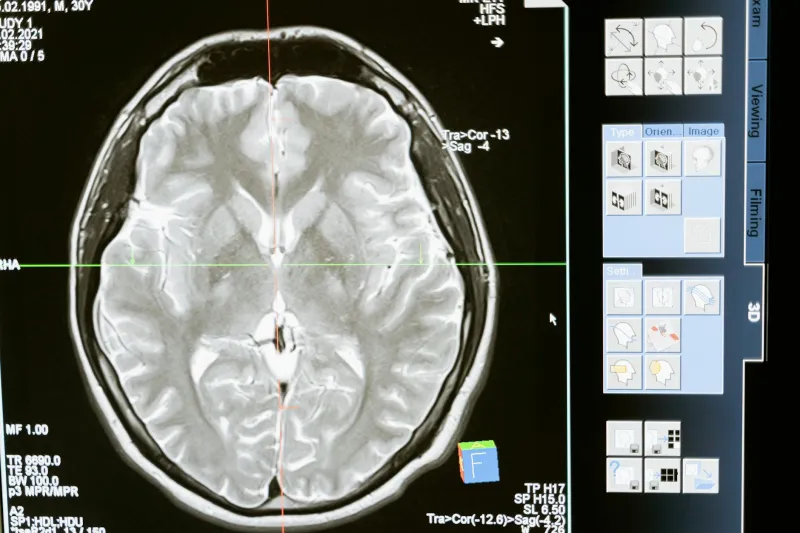
Today's neuroscience technology — including fMRI and PET scans — allows researchers to observe healthy brains in action. What they've consistently found contradicts the left-brain, right-brain personality model.
A comprehensive 2013 study from the University of Utah analyzed brain scans from over 1,000 people aged 7 to 29. Researchers measured activity across 7,000 brain regions while participants performed various tasks. Their conclusion? While certain brain functions do show lateralization, there's no evidence that individuals preferentially use one hemisphere over the other.
"It's absolutely true that some brain functions occur in one or the other side of the brain," explained lead researcher Jeff Anderson. "Language tends to be on the left, attention more on the right. But people don't tend to have a stronger left- or right-sided brain network."
Virtually every cognitive task — whether it's solving a math problem, creating art, or processing emotions — engages networks that span both hemispheres. Your brain operates as an integrated whole, not as two competing personalities.
The Real Story of Brain Specialization
Actual brain lateralization is far more nuanced and interesting than the pop psychology version. Yes, language processing typically occurs in the left hemisphere for most right-handed people, but understanding language meaning often involves right-hemisphere networks. Mathematical calculations might start in the left hemisphere, but spatial math problems engage right-hemisphere regions.
Even creativity — often labeled as purely "right-brained" — involves complex networks spanning both hemispheres. Recent research shows that creative thinking actually requires strong communication between hemispheres, not dominance by one side.
Why the Myth Persists Despite the Evidence
If neuroscience has debunked the left-brain, right-brain personality model for decades, why do people still believe it?
The concept offers several psychological comforts. It provides a simple explanation for individual differences, gives people a sense of identity ("I'm a right-brain person"), and can excuse perceived weaknesses ("I'm just not a math person because I'm right-brained").
Educational systems have also perpetuated the myth. Teachers often design lessons around "learning styles" that include left-brain and right-brain categories, despite research showing that matching teaching methods to supposed brain preferences doesn't improve learning outcomes.
What This Means for You
Understanding that your brain doesn't work in left-right personality categories is actually liberating. You're not limited by which "side" supposedly dominates your thinking. The skills associated with both sides — logical reasoning and creative thinking — can be developed through practice and learning.
Rather than boxing yourself into a brain-based identity, recognize that your cognitive abilities are flexible and interconnected. Your brain's remarkable capacity for growth and adaptation throughout life — called neuroplasticity — means you can strengthen any cognitive skill with effort and practice.
The Bottom Line
The next time someone asks whether you're left-brained or right-brained, you can confidently answer: neither. You're whole-brained, just like everyone else. Your personality, preferences, and abilities are shaped by complex interactions throughout your entire brain, not by the dominance of one hemisphere over another.
The real story of how your brain works is far more sophisticated and hopeful than a simple left-right divide — and that's what makes it truly fascinating.