Your Stomach Doesn't Care When You Drink Water — The Digestion Myth That Won't Quit
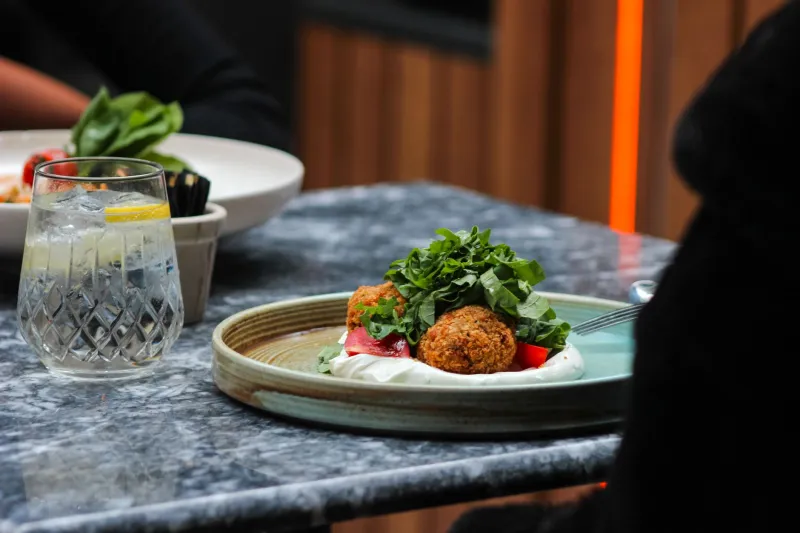
Somewhere along the way, a lot of us picked up a very specific piece of mealtime advice: don't drink water while you eat. The idea sounds almost scientific — you're diluting your stomach acid, washing away digestive enzymes, basically sabotaging the whole operation. Some people time their water intake to thirty minutes before a meal. Others wait until they're done eating entirely. It feels disciplined. Healthy, even.
There's just one problem. Your digestive system doesn't work that way.
Where This Idea Came From
The belief almost certainly has roots in traditional wellness systems, particularly interpretations of Ayurvedic medicine that have been filtered through Western wellness culture. In Ayurveda, the concept of agni — a kind of digestive fire — is central to how food is processed. The loose translation that made it into American health blogs and YouTube channels was that water puts out that fire. Cold water especially got a bad reputation, supposedly solidifying fats and slowing everything down.
None of that maps onto how Western physiology actually describes digestion. But the metaphor is vivid, it sounds intuitive, and it spread.
Along the way, it picked up some scientific-sounding language. 'Diluting stomach acid' became the go-to explanation, and once something gets phrased that way — with a mechanism, with terminology — it starts to feel like a fact rather than a folk belief.
What Your Stomach Is Actually Doing
Here's the real picture. Your stomach is not a static container where acid sits at a fixed concentration waiting to break down food. It's a dynamic, muscular organ that actively adjusts its environment based on what you eat.
When food arrives, your stomach ramps up acid production. It doesn't produce a set amount and call it a day — it responds to what's there. If you drink water with your meal, your stomach registers that too and adjusts accordingly. The system is built to handle mixed inputs. That's kind of the whole point.
Gastroenterologists are fairly consistent on this: water consumed during a meal does not meaningfully dilute gastric acid in any way that impairs digestion. The stomach is constantly secreting acid throughout the digestive process. A glass of water doesn't override that.
In fact, water can actually help move things along. It assists in breaking down food so nutrients can be absorbed more efficiently, and it helps the digestive tract do its job — particularly in the small intestine, where most nutrient absorption actually happens.
The Cold Water Myth Gets Even Weirder
A related claim — that cold water is especially harmful because it hardens fats and slows digestion — doesn't hold up either. Your body maintains a core temperature of around 98.6°F. Any cold liquid you drink warms up rapidly as it moves through your body. By the time it reaches your stomach, the temperature difference is negligible. The idea that a glass of ice water is going to create some kind of fat-solidifying event inside your digestive tract misunderstands basic thermodynamics.
Warm water, cold water, room temperature water — your digestive system isn't particularly fussy about any of it.
Why the Myth Persists
Part of what keeps this idea alive is that it feels like it could be true. The 'dilution' logic has a certain intuitive appeal — if you water something down, it gets weaker. That's true of lemonade. It's not really how stomach chemistry works, but the analogy sticks.
The other factor is the wellness industry's ongoing love affair with optimizing things that don't need optimizing. 'Drink water strategically around meals' sounds like an upgrade. It gives people something to do, a practice to adopt. The fact that it's unnecessary doesn't make it any less appealing as a ritual.
Social media has amplified this considerably. Wellness influencers who frame water timing as a health hack get engagement. Nobody shares a post that says 'drink water whenever you feel like it, your body will handle the rest.'
There Is One Nuance Worth Mentioning
To be fair, there is a small grain of practical truth buried in here — just not the one that gets shared. Some research suggests that drinking water before or during a meal can contribute to a feeling of fullness, which may lead people to eat slightly less. For people trying to manage portion sizes, this is sometimes used intentionally. But that's a satiety strategy, not a digestion strategy, and it has nothing to do with stomach acid.
For people with specific conditions like acid reflux or GERD, meal habits do matter — but the guidance there is about volume and timing relative to lying down, not about whether water ruins the process.
The Takeaway
Drink water when you're thirsty, including during meals. Your stomach has been processing mixed liquids and solids since before you were old enough to hear this advice. The digestive system is not fragile. It's one of the most adaptive systems in your body, and it does not require you to carefully schedule your hydration around it.
The real story here isn't just about water — it's about how easily a plausible-sounding mechanism can masquerade as established fact. Your digestion was fine. It was the advice that needed examining.