The Myth That Launched a Thousand Jokes
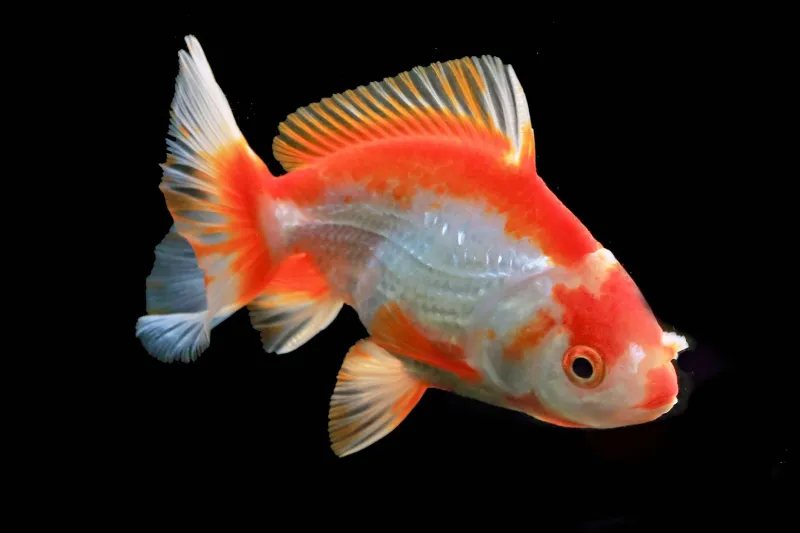
How many times have you heard someone joke about having "goldfish memory" when they forget where they put their keys? The idea that goldfish can only remember things for three seconds (or sometimes three minutes, depending on who's telling the joke) has become so embedded in our culture that it's practically a scientific "fact" in the public mind.
There's just one problem: goldfish actually have excellent memories. And the research proving this has been around for decades.
What Science Actually Shows About Fish Memory
In laboratories around the world, researchers have been training goldfish to perform tasks that would be impossible with three-second memories. Goldfish have learned to navigate complex mazes, recognize human faces, and respond to different colors and shapes — with some retaining these learned behaviors for months.
Dr. Phil Gee from the University of Plymouth trained goldfish to swim through hoops and tunnels on command. His subjects remembered their training routines for at least three months, which is roughly 2.6 million times longer than the supposed three-second limit.
 Photo: Dr. Phil Gee, via i1.sndcdn.com
 Photo: University of Plymouth, via mycrewkit.com
Israeli researchers have documented goldfish remembering feeding schedules and locations for at least three months. Some studies suggest their memory capabilities may extend much longer, but practical research limitations make it difficult to test beyond that timeframe.
The Memory Tests That Changed Everything
One of the most compelling demonstrations comes from researchers who taught goldfish to distinguish between different pieces of classical music. The fish learned to swim to different areas of their tank when they heard Bach versus Stravinsky — and remembered the association weeks later.
Another study trained goldfish to avoid certain areas of their tank by associating them with mild electric shocks. The fish remembered these danger zones for weeks, carefully avoiding them even when the threat was removed. This type of spatial memory requires complex cognitive processing that would be impossible with ultra-short memory spans.
Perhaps most remarkably, researchers have trained goldfish to play soccer — yes, actual soccer — pushing a ball toward goals to receive food rewards. The fish not only learned the rules but remembered them across multiple training sessions.
Tracing the Origins of a Persistent Myth
So where did the three-second memory myth come from? Unlike many scientific misconceptions, this one doesn't seem to trace back to any particular study or researcher. It appears to be what scientists call "folk knowledge" — a widely believed idea with no clear origin point.
Some researchers suspect the myth may have originated as a way to make people feel better about keeping fish in small, barren bowls. If goldfish couldn't remember anything anyway, the thinking might go, then a tiny glass bowl wouldn't seem cruel.
Others point to the general tendency to underestimate animal intelligence, particularly in species that don't express emotions in ways humans easily recognize. Fish don't have facial expressions or make sounds that convey distress, making it easier to assume they lack complex cognitive abilities.
How Bad Science Becomes Common Knowledge
The goldfish memory myth illustrates a broader problem with how scientific-sounding "facts" enter popular culture. Once an idea becomes widely repeated, it gains credibility through sheer repetition rather than evidence.
Psychologists call this the "illusory truth effect" — people tend to believe information they've heard multiple times, even when they can't remember where they heard it or whether the source was reliable. The goldfish memory myth has been repeated so often in cartoons, jokes, and casual conversation that it feels true, regardless of what research actually shows.
Social media has accelerated this process. A quick search reveals thousands of memes and posts confidently stating goldfish memory facts, with very few mentioning that scientists have debunked these claims.
The Real Implications for Pet Ownership
Understanding that goldfish have good memories actually matters for the millions of Americans who keep them as pets. Fish with complex cognitive abilities need environmental enrichment — things to explore, varied feeding routines, and adequate space to swim.
The stereotype of goldfish living happily in small bowls has contributed to poor care practices that can stress or harm the fish. Modern aquarium science recommends tanks of at least 20 gallons for goldfish, with filtration systems and environmental features that provide mental stimulation.
Some pet stores now include information about goldfish intelligence and memory in their care guides, helping to counter decades of misleading conventional wisdom.
Why We Keep Believing Myths About Animal Intelligence
The persistence of the goldfish memory myth reflects broader human biases about animal cognition. We tend to assume that animals unlike us must be less intelligent than us, despite mounting evidence that many species have sophisticated mental abilities we're only beginning to understand.
Crows use tools and solve multi-step puzzles. Octopi have been observed using coconut shells as portable shelters. Even honeybees can learn abstract concepts like "greater than" and "less than." Yet many people still casually assume that animals experience the world in fundamentally simpler ways than humans do.
The Lesson Beyond the Fish Tank
The next time you hear someone reference goldfish memory, you'll know they're repeating a myth that researchers debunked long ago. But the bigger lesson is about how we evaluate the "facts" we think we know.
How many other pieces of conventional wisdom have we accepted without checking whether they're actually true? The goldfish memory myth survived for decades because it sounded plausible and few people bothered to look up what scientists had actually discovered about fish cognition.
In an age of information overload, maybe we could all learn something from goldfish: sometimes it pays to remember more than we think we need to.