The Heart Attack Recovery Plan That Made Patients Weaker — How Medicine Got Exercise Backwards
The Heart Attack Recovery Plan That Made Patients Weaker — How Medicine Got Exercise Backwards
If you had a heart attack in 1970, your doctor would have given you a clear prescription: stay in bed, avoid stairs, and don't even think about breaking a sweat for months. Physical activity was seen as potentially lethal for a damaged heart. Today, that same patient would be walking hospital corridors within 24 hours and enrolled in a structured exercise program within weeks.
This dramatic reversal represents one of medicine's most complete about-faces, transforming how we think about cardiac recovery and revealing how even well-intentioned medical wisdom can sometimes do more harm than good.
When Rest Was the Only Medicine
The logic behind complete cardiac rest seemed bulletproof. Heart attack survivors had damaged heart muscle that needed time to heal, much like a broken bone or torn ligament. Exercise increased heart rate and blood pressure, putting additional strain on an already compromised organ. Why risk further damage when the safest course was simply to let nature take its healing course?
This thinking dominated cardiology for most of the 20th century. Heart attack patients were confined to hospital beds for weeks, then sent home with strict orders to avoid any activity more strenuous than gentle walking. Many were told to give up sports permanently, avoid lifting anything heavier than a gallon of milk, and even skip activities like gardening or climbing stairs.
The medical establishment was so convinced of this approach that questioning it seemed almost reckless. After all, what could be more dangerous than pushing a weakened heart beyond its limits?
The Cracks in the Foundation
By the 1960s, some doctors began noticing troubling patterns among their long-term cardiac patients. Despite following rest protocols religiously, many survivors seemed to be getting weaker, not stronger. They developed muscle atrophy, bone loss, and a condition that would later be recognized as severe deconditioning.
More concerning, these patients weren't living longer than expected. In fact, their overall health outcomes were disappointing, with many experiencing depression, anxiety, and a dramatically reduced quality of life. Some cardiologists began to wonder if the cure was becoming part of the problem.
The breakthrough came from an unexpected source: studies of healthy people subjected to prolonged bed rest. Researchers found that even young, fit individuals lost significant cardiovascular fitness within just weeks of inactivity. Their hearts actually became less efficient, not more protected.
The Exercise Revolution
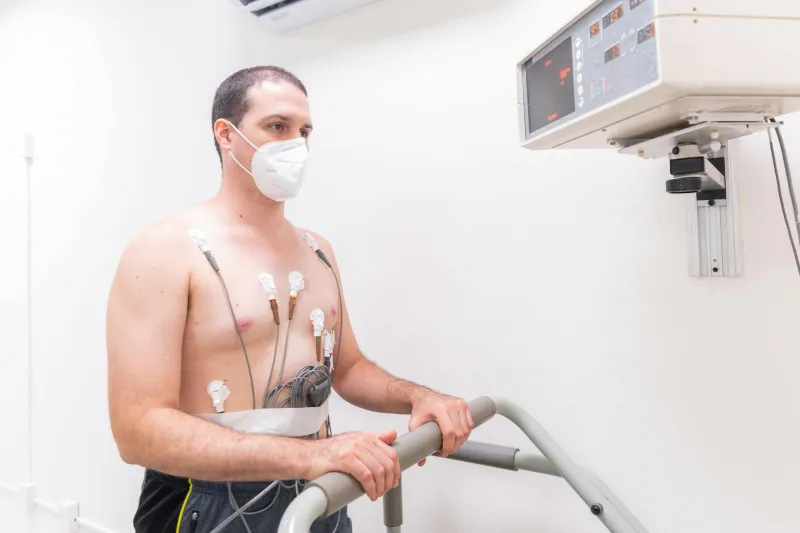
The first cardiac rehabilitation programs emerged in the 1970s, initially as cautious experiments. Doctors began allowing carefully monitored, low-intensity exercise for heart attack survivors, watching nervously for any signs of distress.
What they discovered was revolutionary. Not only could cardiac patients tolerate gentle exercise, they thrived on it. Their hearts grew stronger, not weaker. Blood flow improved. Mental health rebounded. Most remarkably, patients who exercised had fewer subsequent heart attacks and lived longer than those who remained sedentary.
The mechanism became clear as research advanced. Exercise doesn't just strengthen the heart muscle—it promotes the growth of new blood vessels around damaged areas, essentially creating natural bypasses. It also improves the efficiency of existing circulation, reduces inflammation, and helps control risk factors like blood pressure and cholesterol.
Why the Old Thinking Persisted
The "rest is best" approach persisted for so long because it aligned perfectly with our intuitive understanding of healing. When we're injured, we instinctively avoid activities that might cause pain or further damage. This evolutionary response served our ancestors well for obvious injuries like cuts or broken bones.
The heart, however, is fundamentally different. As a muscle that's designed to work continuously, it actually weakens with disuse. Unlike skeletal muscles that can rest between activities, cardiac muscle needs regular challenge to maintain its strength and efficiency.
The medical culture of the era also played a role. Doctors were trained to "first, do no harm," and prescribing activity to heart attack patients felt inherently risky. It was safer to err on the side of caution, even if that caution ultimately proved harmful.
The Modern Approach
Today's cardiac rehabilitation looks nothing like the bed-rest prescriptions of the past. Heart attack patients are typically up and moving within 24-48 hours of their event, starting with supervised walking and gradually progressing to structured exercise programs.
These programs don't just focus on physical activity—they address nutrition, stress management, and medication compliance. The goal isn't just to avoid another heart attack, but to help patients return to full, active lives.
The results speak for themselves. Patients who complete cardiac rehabilitation programs have a 35% lower risk of death over the following years compared to those who don't participate. They report better quality of life, less depression, and greater confidence in their physical abilities.
What This Teaches Us
The cardiac exercise story illustrates how medical knowledge evolves—sometimes in ways that completely overturn previous thinking. It also shows how intuitive reasoning, while often helpful, can sometimes lead us astray when dealing with complex biological systems.
Perhaps most importantly, it reminds us that the human body is remarkably adaptable. What seems like a logical response to injury—complete rest—can sometimes prevent the very healing we're trying to promote.
The next time you hear about a major shift in medical recommendations, remember the heart attack patients of the 1960s. Sometimes the biggest risk isn't doing too much—it's doing too little.