Your Parents Were Wrong — Reading in Bad Light Can't Actually Damage Your Vision
Your Parents Were Wrong — Reading in Bad Light Can't Actually Damage Your Vision
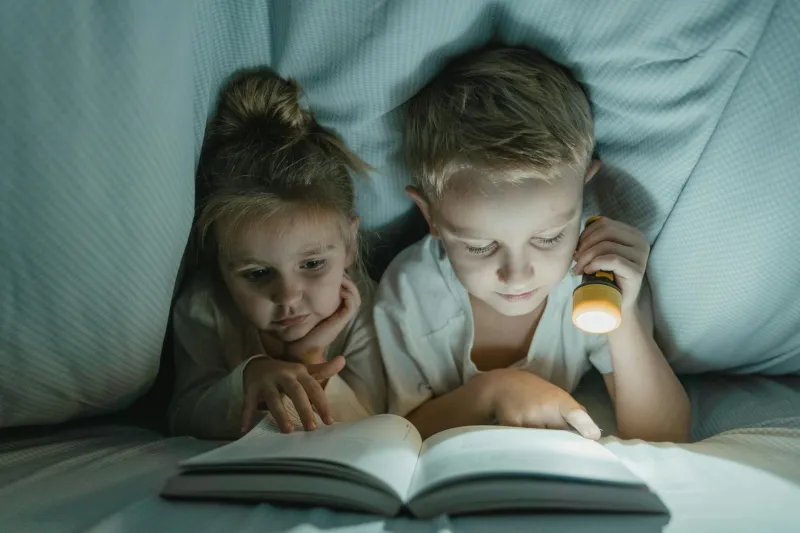
Every parent has said it. You're curled up with a book under the covers, flashlight in hand, when suddenly: "You'll ruin your eyes reading in that dim light!" It's become such universal parenting wisdom that questioning it feels almost rebellious.
But here's what might surprise you: ophthalmologists have been trying to correct this misconception for decades. Reading in poor lighting doesn't cause any permanent damage to your vision whatsoever.
What Actually Happens When You Read in Dim Light
When you strain to see text in low light, your eyes work harder. The pupils dilate to let in more light, and the muscles controlling focus contract more forcefully. This extra effort creates genuine physical sensations — your eyes might feel tired, dry, or even develop a slight headache.
These symptoms are real, which is exactly why the myth feels so believable. Parents see their children rubbing their eyes after reading with a flashlight and naturally assume damage is occurring. But according to the American Academy of Ophthalmology, this temporary discomfort is just that — temporary.
Dr. Rachel Bishop, an ophthalmologist at the National Eye Institute, puts it simply: "Using your eyes in dim light doesn't wear them out any more than whispering wears out your voice."
The Birth of a Household Rule
So how did this warning become standard parenting doctrine? The myth likely emerged during the late 1800s and early 1900s, when electric lighting was still new and inconsistent. Many homes relied on gas lamps, candles, or early electric bulbs that produced flickering, inadequate light.
During this era, eye strain was a genuine public health concern. Factory workers and students regularly developed what doctors called "asthenopia" — severe eye fatigue from poor working conditions. Medical journals from the 1920s are filled with warnings about inadequate lighting in schools and workplaces.
The problem was that doctors of the era made logical assumptions that turned out to be wrong. If poor lighting caused immediate discomfort, surely it must cause long-term damage too. This seemed especially obvious when dealing with children's developing eyes.
By the 1950s, the warning had become embedded in American parenting culture. Dr. Spock's influential baby care books reinforced the idea, and generations of parents passed it down without question.
Why Our Brains Want to Believe It
The myth persists partly because it follows a pattern our brains love: if something feels bad, it must be bad for you. When children complain that their eyes hurt after reading in poor light, parents naturally want to prevent further "damage."
This protective instinct gets reinforced by the fact that good lighting genuinely does make reading more comfortable and efficient. Kids who read with proper lighting can focus longer and comprehend better. Parents see this improvement and assume they've prevented harm rather than simply optimized performance.
There's also a moral component that keeps the myth alive. Reading in dim light often happens when children are reading past bedtime or in other "sneaky" situations. The eye damage warning serves double duty — protecting health while enforcing rules.
What Actually Threatens Children's Vision
While dim light reading is harmless, real threats to children's eyesight do exist. The rise in childhood myopia (nearsightedness) has ophthalmologists genuinely concerned, but the causes aren't what most parents expect.
Extensive screen time, particularly on phones and tablets, may contribute to myopia development. More significantly, children who spend less time outdoors show higher rates of nearsightedness. Some studies suggest that natural outdoor light exposure helps regulate proper eye growth during childhood.
Genetic factors play the largest role in vision problems, followed by certain medical conditions and injuries. But reading in poor lighting? It doesn't make the list.
The Modern Lighting Paradox
Interestingly, today's parents worry about dim light reading while many children spend hours staring at bright screens in dark rooms — a combination that actually can cause more eye strain than reading a book with a flashlight.
The blue light from devices, combined with reduced blinking during screen use, creates the dry eyes and fatigue that previous generations attributed to poor reading light. Yet many parents focus on the old myth while missing the new concern.
What Eye Doctors Actually Recommend
Optometrists do recommend good lighting for reading — not to prevent damage, but to reduce fatigue and improve the reading experience. The ideal setup involves ambient room lighting plus a focused reading light that illuminates the page without creating glare.
For children specifically, doctors suggest the 20-20-20 rule during any close-up work: every 20 minutes, look at something 20 feet away for 20 seconds. This helps relax the focusing muscles regardless of lighting conditions.
The Takeaway
Your childhood flashlight reading sessions didn't damage your eyes, despite what your parents believed. The myth emerged from reasonable but incorrect assumptions during an era of poor lighting technology, then persisted because temporary eye strain feels like it should indicate permanent harm.
While you won't hurt your vision reading in dim light, you also won't enjoy it as much. Good lighting makes reading more pleasant and sustainable — which might be reason enough to turn on a proper lamp, even if your eyesight doesn't depend on it.