When Tanning Was Doctor's Orders
Flip through any magazine from the 1960s and you'll see something that would horrify modern dermatologists: advertisements encouraging people to "get a healthy tan" with baby oil and reflective shields designed to maximize sun exposure. Coppertone's iconic ads featured a little girl with her swimsuit being tugged down by a puppy, revealing her tan lines—and the message was clear: bronzed skin was beautiful, healthy skin.
For most of the 20th century, deliberate sun exposure was considered not just fashionable but medically beneficial. Doctors prescribed "heliotherapy" for everything from tuberculosis to depression. The idea that you needed to slather on sunscreen every morning would have seemed as foreign as wearing a winter coat to the beach.
The Birth of SPF: A Laboratory Solution to a Real-World Problem
The SPF (Sun Protection Factor) rating system emerged in the 1970s as scientists began understanding the link between UV radiation and skin cancer. But here's what most people don't realize: SPF numbers were designed for controlled laboratory conditions that bear little resemblance to actual sun exposure.
In the lab, researchers apply exactly 2 milligrams of sunscreen per square centimeter of skin—about the equivalent of a shot glass worth of lotion for your entire body. They then expose this perfectly even layer to artificial UV light and measure how long it takes for skin to redden compared to unprotected skin.
SPF 30 means it takes 30 times longer for your skin to burn than it would with no protection. SPF 50? Fifty times longer. Simple math, right?
The Real-World Reality Check
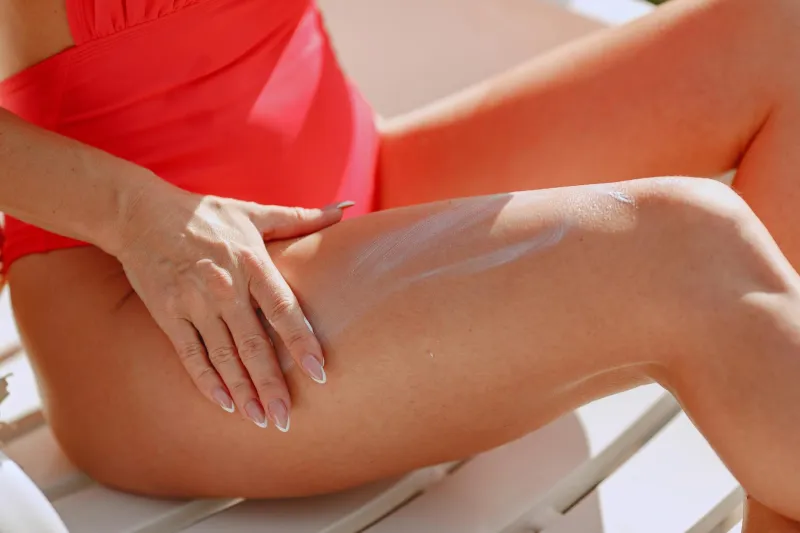
Except real life isn't a laboratory. Studies consistently show that most people apply only about 25-50% of the amount used in SPF testing. That SPF 30 you carefully rubbed in? You're probably getting SPF 7-15 worth of actual protection.
Even worse, the SPF rating only measures protection against UVB rays—the ones that cause sunburn. It says nothing about UVA rays, which penetrate deeper and cause long-term skin damage and premature aging. A product can have sky-high SPF numbers while offering minimal UVA protection.
Dr. Darrell Rigel, a dermatologist and skin cancer researcher, explains the disconnect: "The SPF test was designed to be reproducible in laboratories, not to predict real-world performance. It's like testing a car's fuel efficiency by driving it on a perfectly smooth track at constant speed—useful for comparison, but not very helpful for your daily commute."
How Higher Numbers Became a Marketing Arms Race
Once consumers learned that higher SPF numbers meant better protection, sunscreen manufacturers saw an opportunity. If SPF 15 was good, then SPF 30 must be twice as good, right? And SPF 100? That must be practically bulletproof.
The reality is far more mundane. SPF 15 blocks about 93% of UVB rays. SPF 30 blocks 97%. SPF 50 blocks 98%. SPF 100 blocks 99%. The difference between SPF 30 and SPF 100 is a mathematically insignificant 2%—but psychologically, it feels massive.
Sunscreen companies began competing on SPF numbers like smartphone manufacturers compete on megapixels or car companies compete on horsepower. Higher numbers commanded premium prices and shelf space, regardless of whether they provided meaningfully better protection.
Some countries recognized this marketing manipulation early. Australia caps SPF ratings at 50+, and the European Union limits claims to 50+ as well. Their reasoning: beyond SPF 50, the numbers become misleading rather than informative.
The Sunscreen Theater We All Perform
Americans now engage in elaborate sunscreen rituals that would puzzle our grandparents. We debate whether SPF 70 is sufficient or if we need SPF 100. We reapply religiously every two hours, even when sitting indoors. We buy separate face formulas, sport formulas, and water-resistant formulas, each with its own SPF claims.
Much of this behavior stems from a fundamental misunderstanding of what SPF numbers actually mean. People treat them like percentages—assuming SPF 100 blocks 100% of rays—rather than multipliers of burn time.
This numerical fixation also creates a false sense of security. Someone wearing SPF 100 might stay in the sun longer than someone wearing SPF 30, ultimately getting more UV exposure despite their "superior" protection.
What Dermatologists Actually Recommend
Here's what might surprise you: most dermatologists care far more about sunscreen application habits than SPF numbers. They'd rather see someone consistently use SPF 30 than sporadically apply SPF 100.
The American Academy of Dermatology recommends SPF 30 as the minimum for daily use—not because higher numbers don't work, but because the difference is so small it's not worth the extra cost or the false confidence it might create.
Dr. Henry Lim, former president of the American Academy of Dermatology, puts it simply: "The best sunscreen is the one you'll actually use consistently and correctly. Whether that's SPF 30 or SPF 50 matters much less than whether you apply enough and reapply regularly."
 Photo: Dr. Henry Lim, via mir-s3-cdn-cf.behance.net
The Ingredients That Actually Matter
While Americans obsess over SPF numbers, they often ignore the ingredients that determine real-world protection. Zinc oxide and titanium dioxide provide broad-spectrum coverage against both UVA and UVB rays. Chemical sunscreens like avobenzone and octinoxate can be effective but may break down in sunlight or cause skin reactions.
Water resistance matters more than most people realize. "Water-resistant" means protection lasts 40 minutes in water; "very water-resistant" means 80 minutes. But both require reapplication after swimming or sweating, regardless of SPF level.
The texture and feel of sunscreen often determines whether people use enough. A thick, greasy SPF 100 formula that people apply sparingly provides less protection than a lightweight SPF 30 that goes on easily and encourages liberal application.
Beyond the Numbers Game
The SPF obsession reflects a broader American tendency to reduce complex health decisions to simple metrics. We want a number that tells us we're protected, just like we want a single cholesterol reading or blood pressure measurement to summarize our cardiovascular health.
But sun protection, like most aspects of health, is more nuanced than any single number can capture. Seeking shade during peak hours, wearing protective clothing, and using sunglasses all matter as much as—if not more than—the difference between SPF 50 and SPF 100.
The next time you're standing in the sunscreen aisle, paralyzed by choice between SPF 70 and SPF 85, remember: the marketing department wants you to think those numbers are meaningful. The dermatologists just want you to pick one and use it properly.