Neuroscientists Have Been Debunking the 10% Brain Myth for Decades — So Why Won't It Die?
Neuroscientists Have Been Debunking the 10% Brain Myth for Decades — So Why Won't It Die?
Ask almost anyone on the street whether humans use their full brain, and you'll get a knowing smile followed by something like, "No way — we only use 10% of it." It feels like insider knowledge. The kind of thing a smart person knows. It shows up in self-help books, motivational posters, movie trailers, and casual conversation so often that it barely gets questioned anymore.
There's just one problem: it's not true. Not even a little.
Neuroscientists have been saying this for decades, and modern brain imaging has made the point impossible to argue. So how did a completely fabricated number become one of the most stubbornly believed facts in American culture — and where did it actually come from?
What Your Brain Is Actually Doing
Let's start with the science, because it's genuinely fascinating.
Your brain accounts for about 2% of your body weight, but it consumes roughly 20% of your body's total energy. Evolution is ruthless about efficiency — it doesn't keep expensive tissue around unless it's being used. The idea that 90% of your most metabolically demanding organ is just idling in the background doesn't hold up to basic biology.
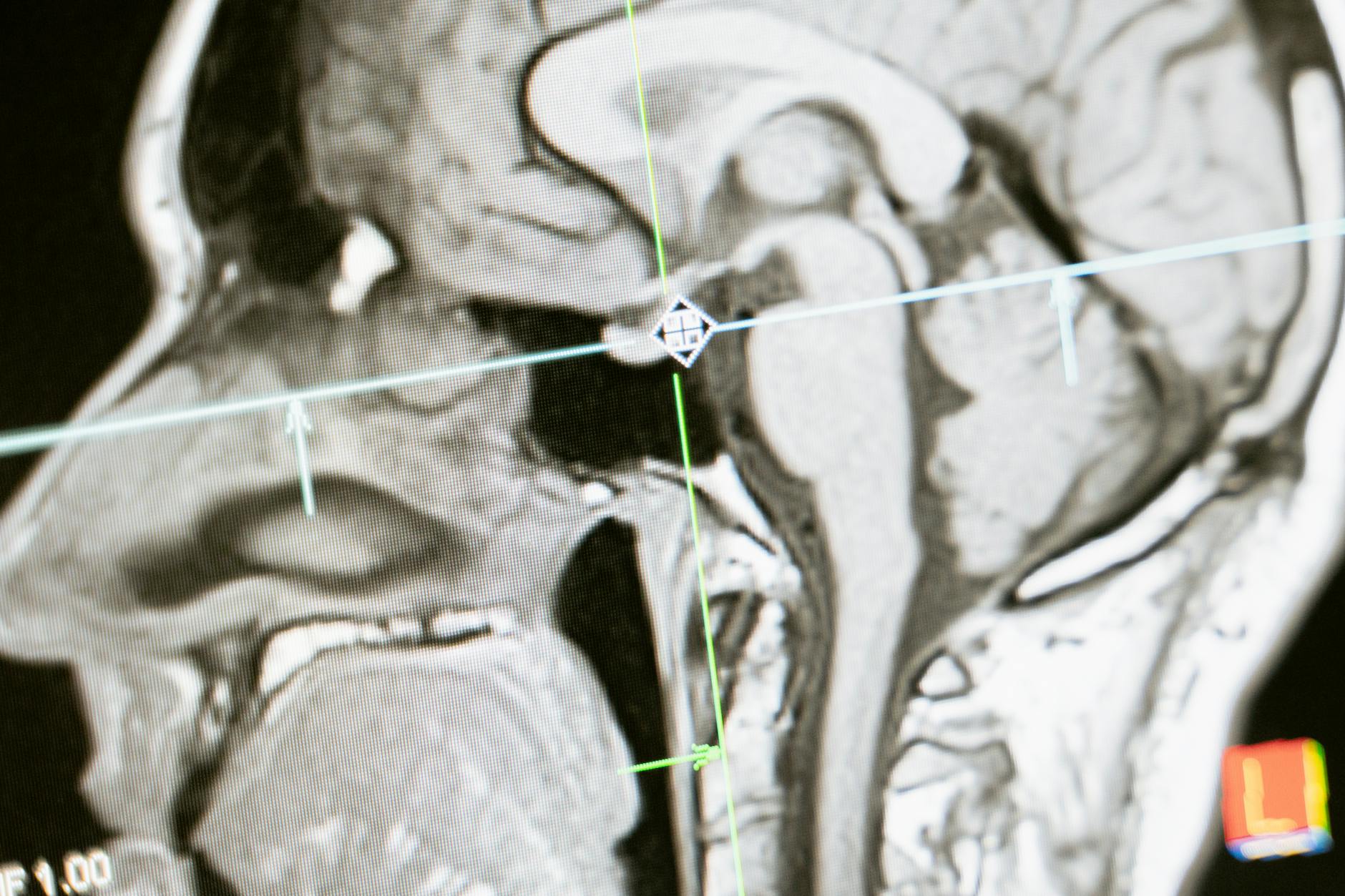
Modern neuroimaging — think fMRI and PET scans — has made it possible to watch the brain in real time. What researchers consistently see is that virtually all brain regions show activity across the course of a day. Different areas activate for different tasks: language, movement, memory, emotion, sensory processing. Even during sleep, significant portions of the brain are hard at work consolidating memories and regulating bodily functions.
There is no dormant 90%. There never was.
Brain damage research makes this even clearer. If 90% of the brain were truly unused, damage to those "inactive" areas would have no effect. But in reality, injury to almost any part of the brain produces some kind of deficit — in movement, speech, personality, memory, or perception. Every region appears to matter.
So Where Did "10%" Come From?
This is where it gets interesting, because the myth doesn't have a single clean origin. It's more like several misunderstandings that merged over time and kept reinforcing each other.
The misattributed Einstein angle is probably the most famous thread. For years, the 10% claim was frequently attributed to Albert Einstein, lending it the kind of authority that makes people stop questioning. There is no credible evidence Einstein ever said this. Researchers and journalists have traced the attribution repeatedly and come up empty. It appears to be a classic case of attaching a catchy idea to a famous name to make it stick.
Early psychology research may have planted the seed. In the late 19th and early 20th centuries, researchers studying brain function discovered that only about 10% of brain cells are neurons — the rest are glial cells, which were long considered mere support tissue. This was sometimes loosely interpreted as meaning only 10% of the brain "does anything." We now know glial cells are deeply involved in brain function, but the oversimplification had already taken root.
William James, the influential American psychologist, wrote in the early 1900s that humans "make use of only a small part of our possible mental and physical resources." He never specified 10%, and he was talking about motivation and effort — not literal brain usage. But his words got distorted and simplified over decades of retelling.
The self-help industry did the rest. The idea that you have a vast, untapped mental reserve is almost irresistibly appealing. It suggests that with the right technique, supplement, or mindset shift, you could unlock superhuman potential. That's a compelling sales pitch, and it's been used to sell everything from memory courses in the 1930s to brain-training apps today.
Hollywood cemented it with films like Lucy (2014) and Limitless (2011), both built entirely around the premise of unlocking the unused 90%. Entertaining movies — genuinely — but they treated a debunked myth as established science.
Why the Myth Feels So True
Part of what makes this one so sticky is that it feels plausible. Most of us have experienced moments of surprising mental clarity, creativity, or focus that seem beyond our everyday baseline. We know we forget things, lose concentration, and underperform. It's easy to interpret that as evidence of unused capacity.
But that's not how the brain works. The variation in your mental performance has to do with attention, sleep, stress, nutrition, and a dozen other factors — not a dormant reserve waiting to be switched on. You're already using your whole brain. You're just not always using it optimally, which is a very different thing.
There's also something uncomfortable about the alternative. If you're already using 100% of your brain and you're still forgetting where you left your keys, that's a little deflating. The 10% myth is comforting. It tells you there's more in there. That the real you is just waiting to be unlocked.
The Real Takeaway
Your brain is not an underused supercomputer waiting for someone to flip a switch. It's an extraordinarily complex organ that's active, adaptive, and working hard pretty much all the time.
The 10% myth persisted not because of any scientific finding, but because it was a good story — one that got attached to credible names, repeated in motivational contexts, and never seriously challenged in popular culture until brain imaging made the truth undeniable.
Next time someone drops this one at a dinner party, you've got the real story. And honestly, the actual science — a brain so efficient and interconnected that damaging almost any part of it changes who you are — is way more interesting anyway.