Carbs Got Blamed for the Obesity Epidemic — But 'Carbs' Covers Everything From Broccoli to Birthday Cake
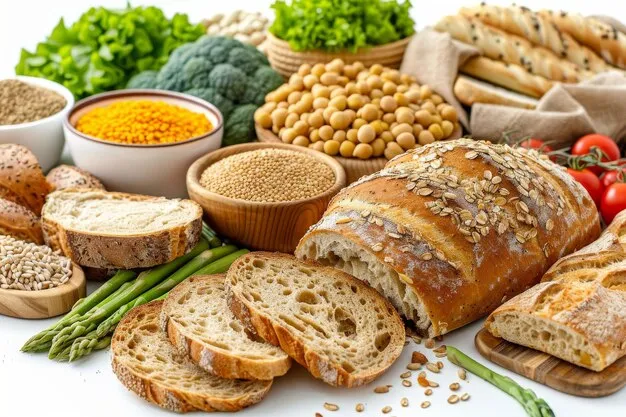
Photo: assorted healthy carbohydrates vegetables grains bread flat lay, via img.freepik.com
Sometime in the 1990s, fat got rehabilitated and carbohydrates became the new enemy. Low-carb diets moved from niche to mainstream. Bread became suspect. Pasta became something people apologized for eating. The Atkins Diet, the South Beach Diet, and eventually keto all built their frameworks on a single foundational idea: carbohydrates are what's making America overweight.
There's a real problem with that framing, though. It treats "carbohydrates" as though it's a meaningful single category — as though the carbohydrates in lentils and the carbohydrates in a Krispy Kreme are essentially the same thing wearing different outfits. They are not. And the failure to make that distinction has created decades of confused dietary advice, unnecessary food anxiety, and some genuinely misleading conclusions about how weight management actually works.
What "Carbs" Actually Means
Carbohydrate is a macronutrient category, not a food type. It describes any molecule made of carbon, hydrogen, and oxygen in a particular ratio — which covers an almost comically wide range of foods.
Vegetables are carbohydrates. Whole grains are carbohydrates. Legumes are carbohydrates. Fruit is carbohydrates. But so is white bread, soda, candy, and most of what's in the snack aisle. The category is so broad that condemning "carbs" as a group is a little like condemning "liquids" — technically a coherent chemical category, practically meaningless as dietary advice.
Nutritionists and researchers have long used a more useful distinction: simple versus complex carbohydrates, or more recently, refined versus minimally processed carbohydrates. These distinctions track something real about how different carbohydrate sources behave in the body.
What Happens When You Actually Eat Carbs
Carbohydrates are broken down into glucose, which enters the bloodstream and triggers an insulin response. The speed of that process varies dramatically depending on the type of carbohydrate and what else is in the food.
A candy bar made primarily of refined sugar hits the bloodstream fast, causing a sharp spike in blood glucose followed by an equally sharp drop — the kind of cycle that drives hunger, energy crashes, and over time, metabolic strain.
A cup of black beans delivers carbohydrates alongside fiber, protein, and a range of micronutrients. The fiber slows digestion. The glucose enters the bloodstream gradually. The insulin response is modest. You feel full longer. The metabolic experience is almost entirely different from the candy bar, even though both technically qualify as "carbs."
This is where the low-carb movement made its most consequential oversimplification: it observed that refined carbohydrates had a problematic metabolic profile and concluded that all carbohydrates shared that profile. The research doesn't support that conclusion.
What Decades of Nutrition Research Actually Found
Studies looking at carbohydrate intake and weight over time consistently find that the type of carbohydrate matters far more than the quantity.
Research published in the New England Journal of Medicine tracking over 120,000 adults over 20 years found that weight gain was strongly associated with specific foods — potato chips, sugary beverages, refined grains, sweets. Whole grains, fruits, and vegetables were associated with less weight gain, and in some cases, weight loss. All of these foods contain carbohydrates. The carbohydrate content itself was not the determining variable.
The glycemic index and glycemic load frameworks, while imperfect, emerged from the recognition that carbohydrate quality was the relevant variable — not carbohydrate presence. And large prospective studies looking at populations who eat high-carbohydrate diets (many traditional Asian diets, Mediterranean diets, the diets of populations with notably low rates of obesity) find that carbohydrate quantity alone is a poor predictor of metabolic health outcomes.
How the Low-Carb Movement Got Traction
None of this means low-carb diets don't work for anyone. They do — and understanding why helps clarify what's actually happening.
When people adopt a low-carb diet, they almost always dramatically reduce their intake of refined carbohydrates: the bread, the pasta, the crackers, the sugary drinks, the processed snacks. They typically increase protein, which is highly satiating and reduces overall calorie intake. They often pay more attention to what they're eating in general. Any one of these changes could produce the weight loss that gets attributed to carbohydrate restriction specifically.
Controlled studies comparing low-carb diets to other calorie-matched diets tend to find similar long-term outcomes, with the initial advantage of low-carb diets largely explained by water loss (glycogen, the storage form of glucose, is held in the body alongside water — deplete glycogen and you lose water weight quickly) and reduced calorie intake.
The mechanism isn't magic. It's mostly that cutting refined carbohydrates cuts a lot of calories, and that's a genuinely useful thing to do. The problem is when the lesson gets generalized to all carbohydrates.
The Cost of Lumping Everything Together
When "carbs" becomes a monolithic villain, people start avoiding foods that have consistently shown up in the research as beneficial — legumes, whole grains, fruit — because they've been told carbohydrates are bad. Meanwhile, the actual dietary problem, which is the outsized presence of ultra-processed, refined carbohydrate foods in the American food supply, gets muddied by the broader anti-carb framing.
A person avoiding brown rice because they're "cutting carbs" while still drinking sweetened coffee drinks and eating low-carb protein bars full of sugar alcohols has absorbed the marketing of the low-carb movement without the actual metabolic logic behind it.
The Actual Takeaway
Carbohydrates are not your enemy. Refined, heavily processed carbohydrates consumed in large quantities — the stuff that makes up the majority of the American packaged food landscape — genuinely do appear to contribute to weight gain and metabolic problems. That's a real finding.
But broccoli is a carbohydrate. So is a lentil, an apple, and a bowl of oatmeal. The decades of research on populations eating those foods do not paint them as dietary villains.
The question was never really "how many carbs?" It was always "which ones?" — and that's a much more useful question to be asking.