The Little Pill That Conquered America's Medicine Cabinets — And Why Doctors Are Now Asking You to Put It Back
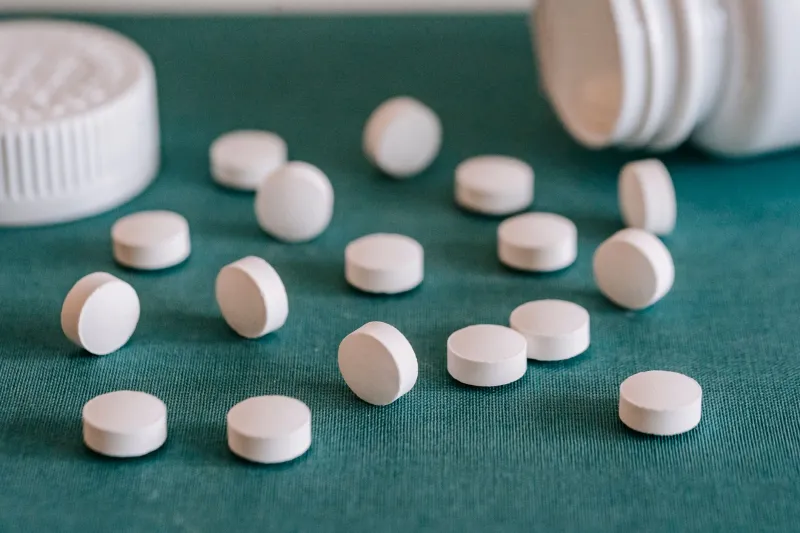
For a long stretch of recent American medical history, the daily baby aspirin was practically a cultural institution. Your doctor mentioned it. Your parents did it. Somewhere along the way, swallowing that small 81-milligram tablet became as routine as taking a multivitamin — a low-effort, low-cost habit that felt like responsible adulting.
Then, quietly, medicine started changing its mind.
How a Genuinely Useful Drug Became Everyone's Drug
Aspirin's connection to heart health isn't fiction. The underlying science is real and well-established. Aspirin is an antiplatelet agent, meaning it makes blood platelets less sticky and less likely to clump together. Since clots are what trigger most heart attacks, the logic seemed airtight: thin the blood a little every day, and you reduce the risk of a catastrophic blockage.
The evidence for this was strong — in a very specific group of people. For patients who had already suffered a heart attack or stroke, or who had been diagnosed with cardiovascular disease, daily low-dose aspirin genuinely reduced the chances of a second event. That's called secondary prevention, and the data supporting it held up.
The problem came when that finding got stretched to cover everyone.
Through the 1980s and into the 1990s, several high-profile studies — including the Physicians' Health Study — suggested that aspirin might also protect healthy people from having a first heart attack. That's primary prevention, and it's a very different population with a very different risk profile. But the medical community, understandably eager for simple preventive tools, ran with it. Guidelines loosened. Doctors started recommending daily aspirin to patients who had no history of heart disease but were considered at moderate risk due to age, blood pressure, or cholesterol levels.
 Photo: Physicians' Health Study, via pisces.bbystatic.com
By the early 2000s, the daily aspirin habit had spread far beyond high-risk patients. Americans were taking it proactively, on their own, sometimes without even consulting a physician. The pill was cheap, over-the-counter, and felt harmless. Why wouldn't you?
The Part Nobody Was Talking About
Here's what got lost in the enthusiasm: aspirin's blood-thinning properties don't just affect arteries in the heart. They affect every blood vessel in your body.
For patients who had already survived a cardiovascular event, the math was clear — the benefit of preventing another clot outweighed the bleeding risk. But for otherwise healthy people, that calculation looked very different. Aspirin increases the risk of gastrointestinal bleeding, including stomach ulcers and internal hemorrhage. It also raises the risk of hemorrhagic stroke — the kind caused not by a clot, but by bleeding in the brain.
For someone with significant cardiovascular disease, those risks were an acceptable trade-off. For a healthy 55-year-old with no prior cardiac history? The numbers were much harder to justify.
When the Trials Came Back
Between 2018 and 2019, three major randomized controlled trials — ARRIVE, ASPREE, and ASCEND — were published in quick succession, and together they fundamentally changed the conversation.
ASPREE, which specifically studied adults over 70 without existing cardiovascular disease, found that daily aspirin provided no significant reduction in cardiovascular events — but did increase the risk of major bleeding, including fatal bleeding. ARRIVE reached similar conclusions in a moderate-risk population. The studies weren't saying aspirin was useless. They were saying it was being given to the wrong people.
The American Heart Association and the American College of Cardiology updated their guidelines accordingly. By 2022, the U.S. Preventive Services Task Force had revised its recommendations to actively discourage daily aspirin use for primary prevention in adults over 60, and to recommend it only selectively — with physician guidance — for adults between 40 and 59 who have a sufficiently high cardiovascular risk score.
 Photo: U.S. Preventive Services Task Force, via www.pngall.com
 Photo: American Heart Association, via snakesfactsforyou.weebly.com
In other words: the blanket recommendation was gone.
Why It Took So Long
This is the part worth sitting with. The daily aspirin habit had been embedded in American health culture for decades before the evidence caught up with the practice. How does that happen?
Part of it is the nature of medical research. Early studies were smaller, shorter, and less rigorous than modern trials. The initial optimism was understandable given what was known at the time. Part of it is also how medical advice spreads — a finding that's true for high-risk patients gets simplified in the press, passed along in waiting rooms, and eventually becomes folk wisdom that nobody questions.
And part of it is that aspirin felt safe. It's been around for over a century. It's sold next to candy at the gas station. The idea that something so ordinary could cause serious harm to otherwise healthy people didn't fit the mental model most people had of it.
What This Actually Means for You
If you have a history of heart attack, stroke, or diagnosed cardiovascular disease, this article isn't for you — your doctor has almost certainly already had this conversation, and your situation is different. Daily aspirin likely still makes sense in your case.
But if you picked up the aspirin habit on your own, or based on advice from a decade ago, it's worth revisiting with your physician. Your individual risk profile — your age, blood pressure, cholesterol, family history, and bleeding risk — all factor into whether the math works in your favor.
The takeaway here isn't that aspirin is dangerous or that medicine made a catastrophic blunder. It's something more nuanced: a genuinely effective treatment for one group of patients got applied universally, and it took decades of better research to draw the line in the right place.
Think again before you assume your old health habits have kept up with the science.