Dentists Have Been Telling You to Floss Every Day for a Century — The Evidence Showed Up Much Later
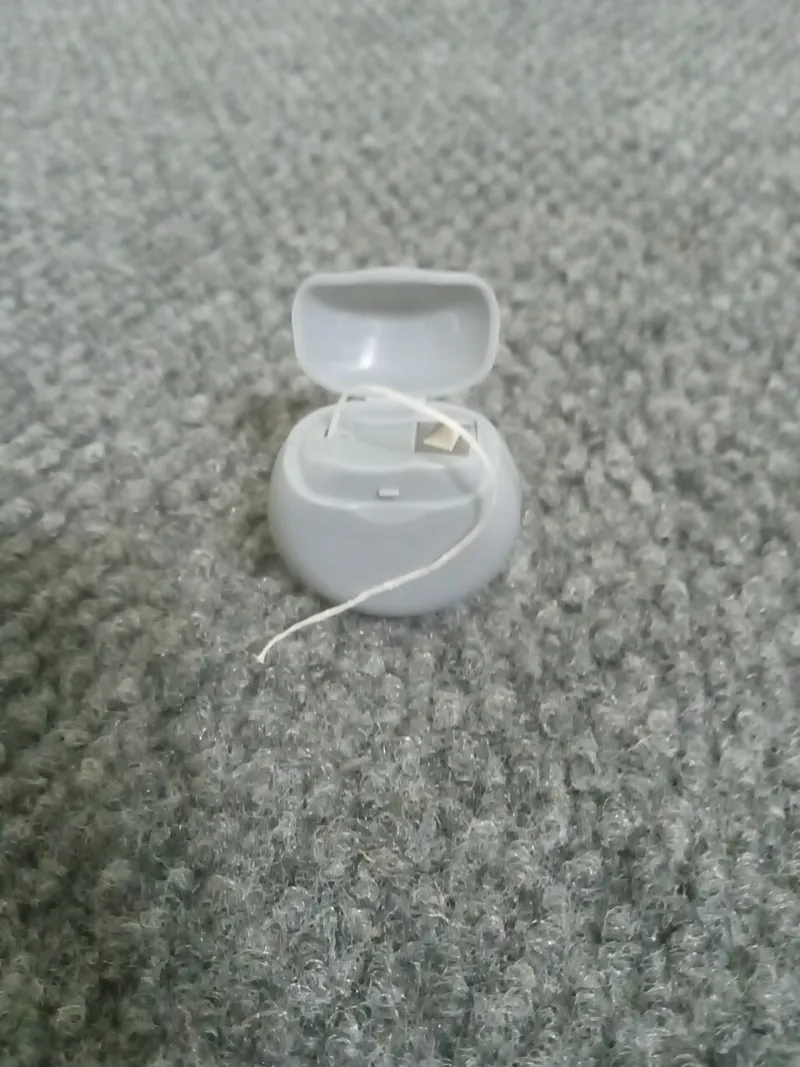
Photo: Texas Lane, CC BY-SA 4.0, via Wikimedia Commons
The ritual is familiar to every American who has ever sat in a dentist's chair. You get the cleaning, you get the mild lecture, and you leave with a small plastic bag containing a toothbrush, some toothpaste, and a spool of floss. The message is delivered with complete confidence: floss every day, or your teeth will pay for it.
It's one of the most universally given pieces of health advice in the country. It's also one that — when scrutinized closely — rests on a surprisingly shaky scientific foundation.
The Investigation That Made Dentists Uncomfortable
In August 2016, the Associated Press published an investigation that sent a quiet tremor through the dental health world. Reporters had submitted Freedom of Information Act requests to federal agencies and combed through decades of research specifically to evaluate the evidence behind daily flossing recommendations.
What they found was striking. The U.S. government had been recommending flossing in its dietary guidelines since 1979 — for 37 years — without the recommendation ever being supported by the kind of rigorous, long-term clinical evidence that would be required to make a similar claim about a drug or medical device. When the 2015 Dietary Guidelines were being updated, the flossing recommendation was quietly dropped, because officials acknowledged they had never formally reviewed the evidence base.
The AP's review of 25 relevant studies found that the research was largely weak. Most studies were short-term — some only two weeks long. Many had small sample sizes. The methodologies varied widely, making comparisons difficult. Some studies were funded by floss manufacturers. And the overall quality of evidence was rated as "weak" or "very unreliable" by researchers who had reviewed the literature independently.
This wasn't a fringe finding. It was a straightforward assessment of what the science actually showed.
How a Practice Became Gospel Without Proof
Flossing as a dental practice dates back to the early 19th century. A New Orleans dentist named Levi Spear Parmly is generally credited with first recommending it in 1819, suggesting patients use silk thread to clean between teeth. The American Dental Association began formally promoting flossing in the 1900s, and by mid-century it had become a standard recommendation built into dental school curricula and patient education.
 Photo: American Dental Association, via www.russelljohns.com
 Photo: New Orleans, via a.cdn-hotels.com
The problem is that this happened long before modern evidence-based medicine existed as a framework. Recommendations were built on clinical intuition, anatomical reasoning, and professional consensus rather than controlled trials. The logic seemed sound: plaque accumulates between teeth where toothbrushes can't reach, and removing that plaque should prevent cavities and gum disease. That's a reasonable hypothesis. It just wasn't the same thing as proof.
By the time researchers started applying rigorous standards to the question, the recommendation had already been embedded in public health messaging for generations. Challenging it felt almost absurd — like questioning whether people should wash their hands.
What the Research Does and Doesn't Show
To be fair to flossing, the absence of strong evidence isn't the same as evidence of absence. There are real biological reasons to believe that removing interdental plaque is beneficial. Gum disease — periodontitis — is genuinely linked to serious health outcomes, including increased risk of cardiovascular disease and diabetes complications. And the spaces between teeth are real reservoirs for the bacteria that cause both cavities and gum disease.
The issue isn't that flossing is a bad idea. The issue is that the specific claim — that daily flossing measurably reduces cavities and gum disease in the general population — hasn't been rigorously demonstrated in the way we'd expect for other health recommendations.
Some researchers point out that the studies done so far may simply be inadequate to detect a real benefit, not that the benefit doesn't exist. Gum disease develops over years and decades; two-week studies are almost certainly too short to measure meaningful outcomes. Better-designed, longer-term trials might tell a different story.
But here's the uncomfortable truth: those better-designed trials largely haven't been done. And the recommendation has been delivered with complete certainty for over a century anyway.
What Oral Health Experts Agree Actually Works
While the flossing debate simmers, there's strong consensus around what unambiguously protects your teeth.
Brushing with fluoride toothpaste has a robust evidence base behind it. Fluoride's role in remineralizing tooth enamel and preventing cavities is one of the most thoroughly studied interventions in public health. Brushing twice daily for two minutes with a fluoride toothpaste is about as well-supported as dental advice gets.
Reducing sugar intake and acid exposure is also well-evidenced. The bacteria responsible for tooth decay feed on fermentable carbohydrates, particularly sugar, and the acid they produce is what erodes enamel. Diet matters enormously.
Regular professional cleanings remove calculus (hardened plaque) that no amount of home brushing or flossing can address.
As for interdental cleaning — the category flossing belongs to — some dental researchers suggest that interdental brushes (the small brush-tipped tools that fit between teeth) may actually be more effective than traditional string floss for people with the space to use them. The evidence for interdental brushes is somewhat stronger than for floss, though still not ironclad.
The Deeper Lesson Here
The flossing story isn't really about whether you should or shouldn't floss. It's about how health recommendations get made, how they persist, and how rarely we go back and verify that the advice we've been confidently delivering for generations actually holds up.
Medical and dental authorities have been more willing in recent years to acknowledge uncertainty — to say "this is plausible and low-risk, so we recommend it" rather than presenting every piece of guidance as settled science. That's a healthier epistemic posture, even if it's less reassuring in the moment.
For now, flossing is cheap, low-risk, and probably not hurting you. But the next time your dentist asks whether you've been doing it every night and you feel a pang of guilt — know that the science behind that guilt is a lot thinner than the confident tone of the question suggests.