The Perfect Posture You Keep Chasing Was Invented in the Victorian Era — Not a Doctor's Office
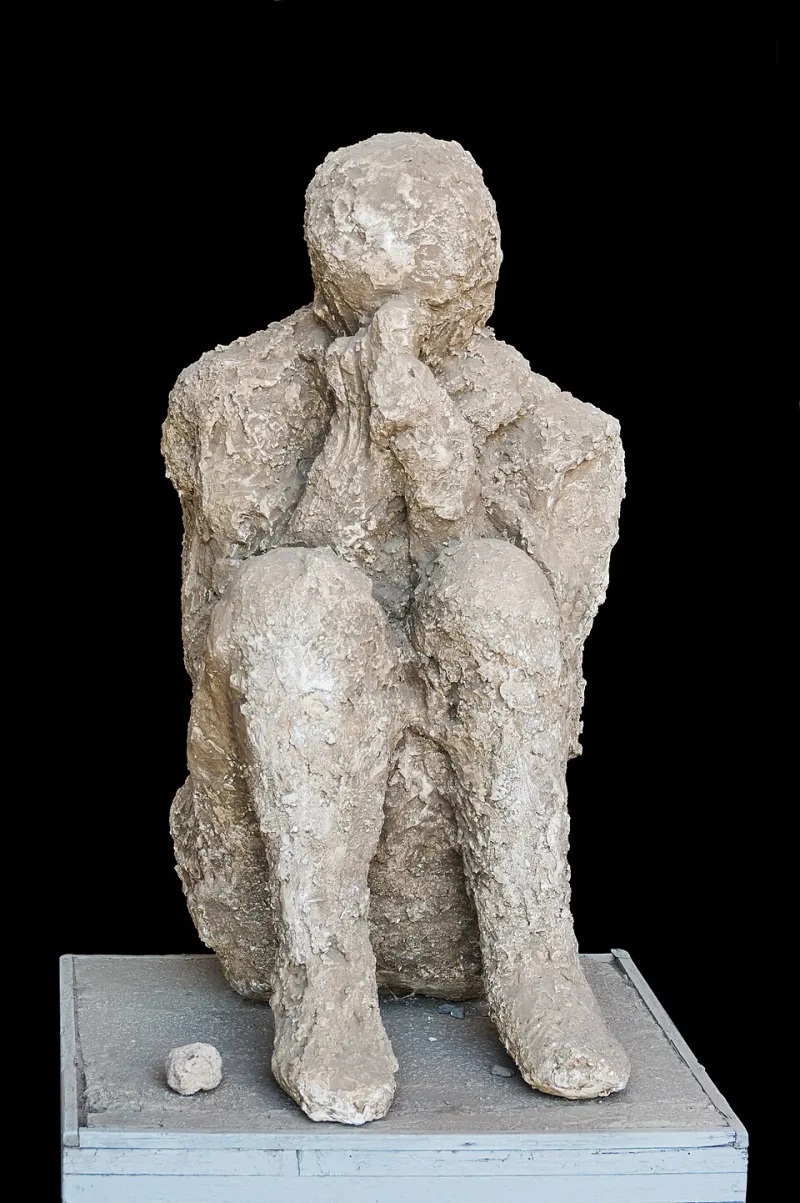
Photo: Jebulon, CC0, via Wikimedia Commons
At some point in the last few years, posture became a personality trait. TikTok is full of tutorials on chin tucks and shoulder retractions. Ergonomic product sales are booming. Posture-correcting braces are marketed like medical devices. And somewhere in the comment section of every back pain video, someone is confidently explaining that if you'd just hold yourself correctly, none of this would be happening.
The only problem? The "correct" posture everyone is chasing was largely invented by people who had nothing to do with spinal biomechanics — and modern spine researchers are increasingly skeptical that it exists at all.
The Military Invented Your Posture Standards
The modern Western ideal of good posture — chest lifted, spine straight, chin parallel to the floor, shoulders pulled back — has deep roots in 19th-century military culture. European armies, and later American ones, used rigid upright stances as a symbol of discipline, fitness, and moral character. Standing tall wasn't just about physical alignment; it was a visual signal of control and respectability.
This military aesthetic filtered into civilian life through physical education movements of the late 1800s and early 1900s. Schools began conducting posture evaluations. Photographs were taken of students in profile. "Posture contests" were held at universities, where young women were judged on the straightness of their spines. The assumption running through all of it was that a specific alignment was correct, and deviation from it was a failure of either body or character.
The industrial revolution added another layer. As more Americans moved into desk-based and factory work, concern about slouching became tied to productivity and workplace efficiency. Ergonomics as a field emerged partly from this anxiety, and early recommendations leaned heavily on the upright military standard rather than on any empirical study of what spines actually prefer.
What Spine Researchers Have Found Since Then
Decades of research in orthopedics, physical therapy, and biomechanics have complicated the tidy Victorian picture considerably.
For starters, spines are not straight. A healthy spine has natural curves — a forward curve in the neck, a backward curve in the upper back, and a forward curve again in the lower back. These curves exist to absorb shock and distribute load. An exaggeratedly "straight" posture can actually flatten these natural curves and create more mechanical stress, not less.
More significantly, a substantial body of research now suggests that the relationship between posture and pain is far weaker than the wellness industry implies. Studies have repeatedly failed to find a consistent link between slouching and back pain. A 2012 review in the Journal of the Canadian Chiropractic Association found that the evidence connecting poor posture to low back pain was "weak and inconsistent." Later reviews have reached similar conclusions.
Perhaps more surprising: studies of people in non-Western cultures who regularly squat, sit cross-legged, or adopt positions that would horrify a posture coach show remarkably low rates of back pain. Their spines don't conform to the upright Western standard, and they're doing fine.
Why Obsessing Over Posture Can Actually Make Things Worse
Here's where the posture correction industry runs into a genuine problem. When people become hyper-aware of their alignment and spend significant mental energy maintaining a specific position, they often create new tension rather than relieving it.
Holding any position statically for extended periods — including the "correct" one — increases muscular fatigue and compressive load on spinal joints. Physical therapists increasingly emphasize that movement variety matters more than static alignment. In other words, the best posture is one that keeps changing.
There's also a psychological dimension. Posture anxiety — the constant self-monitoring and correction that wellness content encourages — activates the nervous system in ways that can amplify pain perception. Research on chronic pain has shown that catastrophizing and hypervigilance about body sensations tend to worsen outcomes, not improve them. Telling someone their spine is constantly in danger of misalignment is not a neutral message.
Posture-correcting wearables and braces have a similar problem. By providing external support, they can reduce the activity of the muscles that would otherwise be doing the stabilizing work. Use one long enough and you may end up with weaker supporting muscles than you started with.
What Actually Helps Your Back
Spine researchers and physical therapists have largely converged on a few evidence-backed recommendations that look nothing like the Victorian ideal.
First, move more and change positions frequently. The spine needs load variation, not a fixed "correct" angle. Getting up from your desk, shifting how you're sitting, alternating between sitting and standing — these do more good than any particular alignment.
Second, build general strength. Stronger glutes, core, and back muscles give your spine more support regardless of exactly how you're positioned. The muscles matter more than the static angle.
Third, address pain when it appears rather than preemptively treating your body as broken. Most back pain resolves on its own. Treating it as a structural emergency requiring constant correction tends to extend suffering rather than shorten it.
The Takeaway
Perfect posture isn't a medical concept — it's a cultural one, inherited from an era that valued the appearance of discipline over the mechanics of human biology. Your spine doesn't want to be held at attention. It wants to move, shift, and adapt throughout the day.
The next time an algorithm serves you a posture correction tutorial, it might be worth asking: who decided this was the standard? The answer, it turns out, is not who you'd expect.