The $15 Pair From the Drugstore Rack Protects Your Eyes Just as Well as the $300 Designer Frame
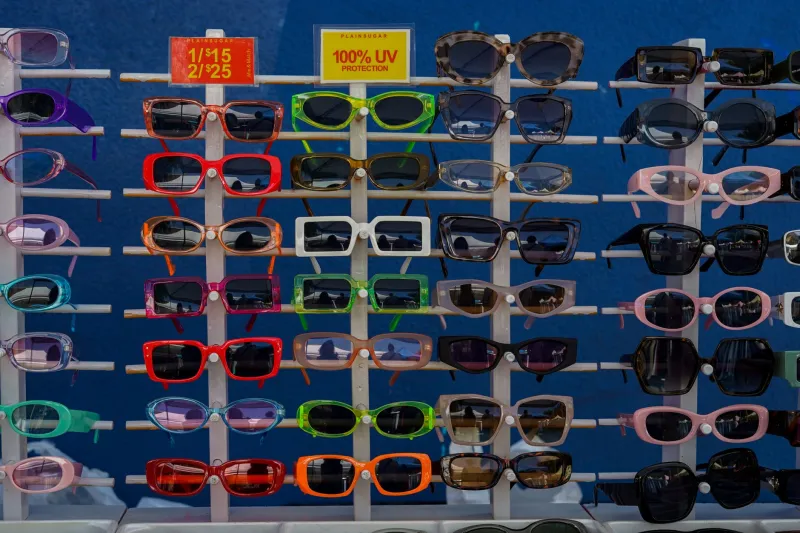
There's a moment most of us have experienced at the beach or the airport gift shop — reaching for a cheap pair of sunglasses and then hesitating. Are these actually doing anything for my eyes? We put them back, make a mental note to invest in something better, and squint our way through the rest of the afternoon.
That hesitation is worth examining. Because the science behind UV protection in sunglasses is a lot simpler — and a lot more democratic — than the eyewear industry would like you to know.
What UV Protection Actually Means
Ultraviolet light comes in two flavors that matter for your eyes: UVA and UVB. Long-term exposure to both has been linked to cataracts, macular degeneration, and damage to the cornea. Real protection means blocking as close to 100% of both types as possible — and that protection is labeled on sunglasses as "UV400," meaning the lenses block wavelengths up to 400 nanometers, which covers the full UV spectrum.
Here's the part the industry doesn't advertise loudly: achieving UV400 protection requires applying a chemical coating to the lens during manufacturing. That coating costs pennies. It's the same basic process whether the frames end up on a rack at a gas station or inside a velvet-lined case at a department store boutique.
A 2020 study published in JAMA Ophthalmology tested dozens of sunglasses across a wide price range and found that the majority of budget pairs — including many sold for under $20 — blocked UV light just as effectively as premium brands costing ten to twenty times more. Price, the researchers concluded, was not a reliable indicator of UV protection.
So What Are You Paying for When You Spend More?
This is where it gets interesting, because expensive sunglasses aren't necessarily a scam — they're just a different product than what most people think they're buying.
High-end lenses often offer better optical clarity, which means less distortion when you look through them. They may use polarized technology that reduces glare from reflective surfaces like water or wet roads — genuinely useful for driving and outdoor sports. Premium frames are frequently made from lighter, more durable materials. And some luxury brands do invest in scratch-resistant coatings and more sophisticated lens tints.
All of that is real value — for the right buyer. But none of it is UV protection. That part is already handled by the coating that every responsible manufacturer applies regardless of price point.
The confusion exists because the industry has been extraordinarily good at bundling these separate features together in marketing language. When an ad talks about "advanced lens technology" protecting your vision, it's easy to assume that means UV blocking — and that cheaper lenses must be cutting corners on that fundamental protection. Usually, they're not.
The Conglomerate Behind the Curtain
One reason this story has stayed complicated is that the global eyewear market is dominated to an unusual degree by a single company. Luxottica — now merged with Essilor to form EssilorLuxottica — controls a staggering portion of the premium sunglass market. They manufacture frames for dozens of brands you'd recognize as competitors: Ray-Ban, Oakley, Persol, and many designer licenses including Prada, Chanel, and Versace. They also own LensCrafters and Sunglass Hut.
When one company controls both the manufacturing and the retail environment for premium eyewear, the incentive to educate consumers about the simplicity of UV coatings is essentially zero. The business model depends on consumers believing that optical protection scales with price. It doesn't — but the marketing has been consistent enough and long-running enough that the assumption has become almost universal.
What You Should Actually Look for at the Store
None of this means you should grab the first pair you see without checking anything. A few things genuinely do matter:
Look for the UV400 label. Any reputable pair of sunglasses — regardless of price — should clearly state UV400 or "100% UV protection" on the tag or sticker. If a pair doesn't carry that label, put it back. That's the one non-negotiable.
Lens size and coverage matter too. Larger lenses and wraparound styles block more ambient UV light from reaching your eyes from the sides. This has nothing to do with coating quality — it's just geometry.
Polarization is a bonus, not a requirement. If you drive a lot or spend time near water, polarized lenses genuinely reduce glare and eye strain. But they don't add UV protection — they're a separate feature worth paying a little extra for if it fits your lifestyle.
Darkness of the lens is irrelevant to UV blocking. This is a persistent misconception: a very dark lens with no UV coating is actually more dangerous than a light lens with proper coating. Dark lenses cause your pupils to dilate, letting in more light — and if there's no UV filter, more harmful rays reach your retina. The tint is purely cosmetic.
The Takeaway
The assumption that cheap sunglasses are bad for your eyes is one of those beliefs that feels intuitive but falls apart under scrutiny. UV protection is a coating, not a craftsmanship achievement. A $15 pair from the drugstore with a UV400 label is doing the same essential job as a $300 designer frame — it's just not doing the polarization, the optical clarity, or the style statement.
Knowing that doesn't mean you have to stop buying nice sunglasses. It just means you can stop feeling guilty about the cheap pair — and stop squinting.