Hand Sanitizer Is a Genuinely Useful Tool — And Most of Us Have Been Using It Wrong
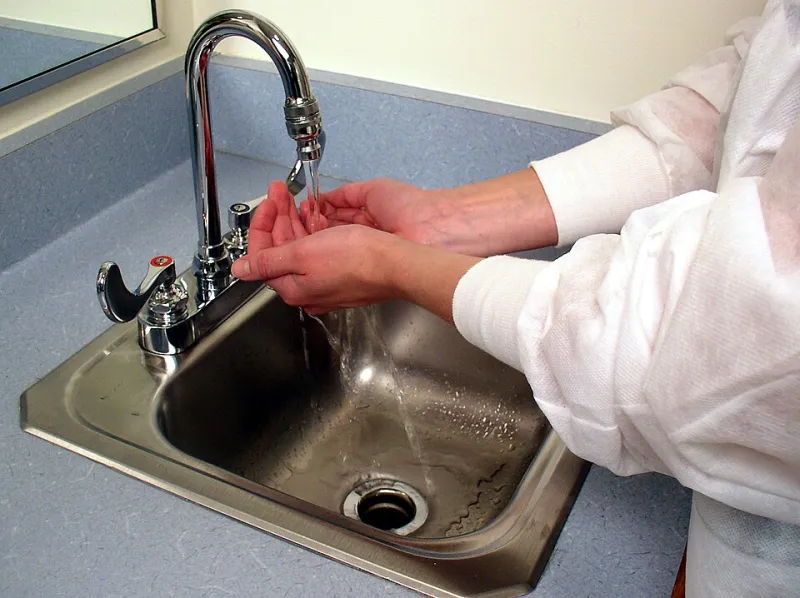
Photo: CDC, Kimberly Smith, Christine Ford, Public domain, via Wikimedia Commons
At the height of the pandemic, hand sanitizer became something close to a talisman. People kept it in their cars, clipped it to their bags, placed it next to their laptops, and reached for it compulsively before and after touching almost anything. Poison control centers across the country reported a spike in calls — children drinking it, adults accidentally getting it in their eyes, people using it in quantities that caused skin damage.
All of that chaos unfolded around a product that most people had never actually been taught to understand. Hand sanitizer is a real public health tool with genuine, well-documented benefits. It's also far more limited than pandemic-era behavior suggested — and the way most people apply it undermines its effectiveness in ways that are completely fixable.
The Basic Chemistry, Explained Simply
Alcohol-based hand sanitizers work through a straightforward chemical mechanism: the alcohol — typically ethanol or isopropanol at concentrations between 60% and 95% — disrupts the outer membrane of microbial cells, causing them to break down and die. This happens quickly and effectively against a wide range of bacteria and many viruses, including influenza and coronaviruses like SARS-CoV-2.
The key word in that sentence is many. Not all.
Hand sanitizer has well-known blind spots. It performs poorly against norovirus, the stomach bug responsible for most food poisoning outbreaks on cruise ships and in school cafeterias. It's largely ineffective against Clostridioides difficile (C. diff), a serious bacterial infection common in healthcare settings. It also struggles against certain parasites and some non-enveloped viruses. For these pathogens, old-fashioned soap and running water — which physically removes organisms from the skin rather than killing them in place — remains far more effective.
This distinction matters because during the pandemic, hand sanitizer was promoted so broadly and so urgently that many people began treating it as a universal defense. It isn't. Knowing what it actually targets makes it a much more useful tool.
The Rubbing-It-In-Fast Problem
Here's something that most people have never been told: the time hand sanitizer stays wet on your hands directly determines how well it works.
For alcohol to disrupt microbial membranes, it needs contact time — typically 20 to 30 seconds of coverage across all surfaces of the hand. When people apply a small amount and immediately rub their hands together until they feel dry — which can happen in five seconds or less — the alcohol evaporates before it has fully done its job.
Studies comparing proper sanitizer application technique against casual use have found meaningful differences in pathogen reduction. The CDC's own guidance recommends covering all surfaces of both hands and rubbing until completely dry, which should take at least 20 seconds with an adequate amount of product. The quick swipe that most people perform is better than nothing, but it's not the full effect the product is capable of delivering.
The amount used matters too. A single small pump is often insufficient to cover both hands completely. Most people apply far less than the recommended volume, which further limits the coverage and contact time.
Dirty Hands Are a Separate Problem
Hand sanitizer is designed to work on hands that are visibly clean. When hands are physically dirty — covered in soil, grease, food residue, or heavy contamination — alcohol can't make adequate contact with the skin surface because the organic matter creates a barrier. In those situations, sanitizer provides minimal protection and should not substitute for washing with soap and water.
This is a significant limitation that was almost never communicated during the peak of sanitizer use. People were wiping down grocery carts and then immediately using sanitizer over hands that may have had surface contamination — a sequence that feels protective but is largely theater.
How a Useful Product Became a Cultural Cure-All
The pandemic created conditions that were almost perfectly designed to produce this kind of mythologized behavior. Fear was high, information was moving fast, and the public was looking for concrete actions they could take. Hand sanitizer was visible, accessible, and recommended by health authorities — which made it easy to treat as a comprehensive solution rather than one piece of a larger prevention strategy.
Manufacturers, facing unprecedented demand, weren't motivated to lead with limitations. The messaging around hand sanitizer was almost uniformly positive, and the nuances — what it doesn't kill, how technique affects performance, when soap is the better choice — never made it into the mainstream conversation.
Poison control data from 2020 and 2021 tells part of the story: calls related to hand sanitizer exposure spiked dramatically, with ingestion by young children being the most common concern. The high alcohol content makes sanitizer genuinely dangerous if consumed, and the proliferation of small, attractively packaged bottles placed at child height in every public space created predictable problems.
Using It Right Going Forward
Hand sanitizer remains a valuable tool, especially in situations where soap and water aren't accessible. The practical guidelines are simple:
- Use it when your hands are visibly clean but potentially contaminated by touch
- Apply enough to cover all surfaces of both hands
- Rub for the full 20 to 30 seconds until your hands are completely dry
- Choose soap and water when your hands are visibly dirty, before eating, or after contact with someone who has a stomach illness
- Don't rely on it against norovirus or C. diff — those require soap and water or, in clinical settings, more specialized protocols
The Takeaway
The story of hand sanitizer in America is really a story about what happens when a useful but limited tool gets promoted without explanation. The product works — genuinely, meaningfully works — when used correctly and in the right situations. The problem was never the sanitizer. It was the assumption that grabbing the bottle was the same thing as understanding what was inside it.