The Doctor Who Discovered Handwashing Saves Lives Was Locked in an Asylum for Saying So

We take handwashing for granted now. It's elementary school health class material. It's on signs in restaurant bathrooms. It was the central public health message of a global pandemic. The idea that clean hands prevent disease transmission feels so basic, so obviously correct, that it's almost impossible to imagine a world where the medical establishment didn't just fail to teach it — but actively fought against the person who proved it.
That world existed less than 200 years ago. And the doctor who tried to change it paid with everything he had.
A Maternity Ward With a Terrible Secret
In 1846, a young Hungarian physician named Ignaz Semmelweis took a position at the Vienna General Hospital, working in its maternity department. The hospital had two maternity wards. One was staffed primarily by medical students and physicians. The other was staffed by midwives.
 Photo: Vienna General Hospital, via img.bookimed.com
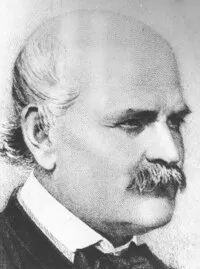 Photo: Ignaz Semmelweis, via www.washingtonpost.com
The mortality rates in those two wards were staggeringly different.
In the physician-staffed ward, somewhere between 10 and 35 percent of mothers were dying from what was then called "childbed fever" — a post-delivery infection that moved fast and killed faster. In the midwife ward, the death rate was closer to 4 percent. The difference was so well known among Viennese women that some reportedly begged not to be assigned to the physician ward. Some gave birth in the street rather than risk it.
Semmelweis became obsessed with the question of why. The two wards were in the same building. They used similar techniques. The patients came from similar backgrounds. What was different?
The answer came into focus after a colleague named Jakob Kolletschka died following a scalpel nick sustained during an autopsy. His autopsy revealed the same pathological features as the women dying of childbed fever. Semmelweis made the connection: the medical students and physicians who worked in the high-mortality ward were moving directly from performing autopsies to delivering babies — without washing their hands.
The midwives weren't doing autopsies. They weren't carrying what Semmelweis called "cadaverous particles" from the dead to the living. That was the difference.
The Solution That Worked — and the Reaction That Followed
In 1847, Semmelweis introduced a new requirement in his ward: everyone had to wash their hands with a chlorinated lime solution before examining patients. The results were immediate and dramatic. Mortality rates in his ward dropped to below 2 percent — lower, in fact, than the midwife ward.
He had done what science is supposed to do: identified a problem, formed a hypothesis, tested it, and produced measurable results. By any reasonable standard, this was a major discovery.
The medical establishment's response was to largely ignore him, then ridicule him, then push him out.
The reasons were tangled and deeply human. Semmelweis's theory implied that physicians themselves — educated, respected men — were killing their patients by carrying contamination on their hands. This was not a comfortable suggestion. It threatened professional identity and status in ways that went beyond scientific disagreement. Many prominent doctors found the idea personally offensive. Some pointed out that Semmelweis couldn't explain the mechanism by which these "particles" caused disease — germ theory wouldn't be firmly established until decades later, through the work of Louis Pasteur and Robert Koch.
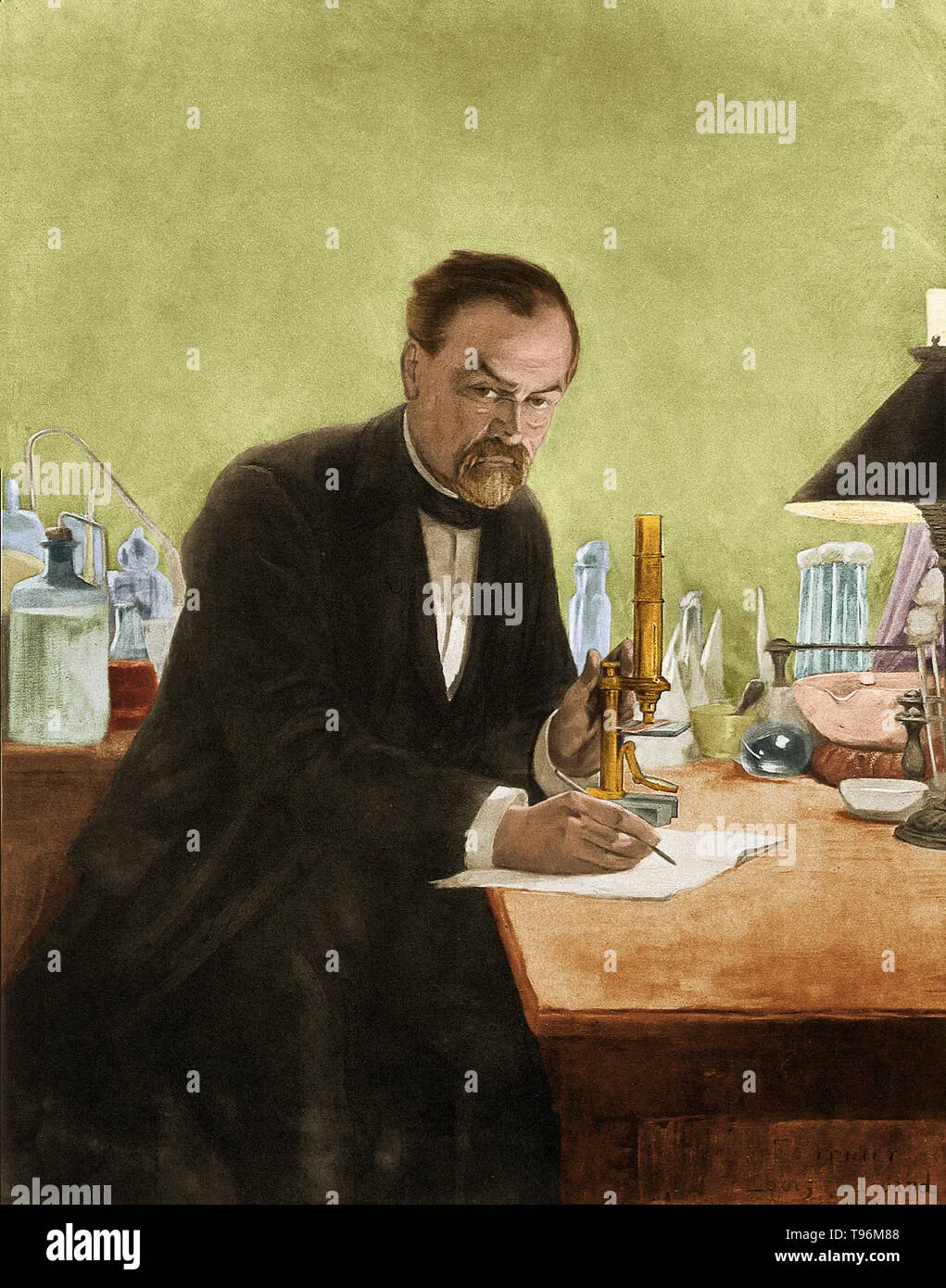 Photo: Louis Pasteur, via c8.alamy.com
He also wasn't a natural diplomat. Semmelweis grew increasingly frustrated and combative as the evidence mounted and the resistance continued. He wrote long, accusatory letters to prominent European obstetricians, calling those who dismissed his findings murderers. It did not help his cause.
The Asylum, and the Bitter Irony of His Death
By 1865, Semmelweis was showing signs of what historians now believe may have been early-onset dementia, or possibly a mental breakdown accelerated by years of professional rejection and personal anguish. His colleagues had him committed to a mental asylum in Vienna.
He died there two weeks later, at 47 years old. The cause of death was septicemia — a bloodstream infection. Some historians believe it resulted from a beating by guards. Others suggest it was a wound sustained during his final surgery before institutionalization.
Either way, the man who proved that infections could be prevented by clean hands died of an infection, in an institution, after being dismissed by the profession he had tried to protect.
Germ theory was formally established a few years later. Handwashing became standard practice. Joseph Lister developed antiseptic surgical techniques that saved countless lives. Semmelweis was eventually recognized as a pioneer — streets and hospitals in Hungary bear his name — but the recognition came long after he was gone.
What His Story Actually Tells Us
The Semmelweis story is often framed as a simple tale of a lone genius rejected by a stubborn establishment. That's part of it. But the more useful lesson is about the specific shape of institutional resistance.
The medical community of the 1840s wasn't full of stupid people. It was full of intelligent, educated professionals who had real reasons — some scientific, some social, some psychological — to be skeptical of a challenge to their existing worldview. The problem wasn't ignorance. It was the very human tendency to resist information that's inconvenient, that implies past error, or that comes delivered with accusatory force.
This pattern didn't end with Semmelweis. Barry Marshall and Robin Warren drank bacteria in the 1980s to prove that ulcers were caused by H. pylori infection — not stress — and faced years of medical skepticism before winning the Nobel Prize. The link between smoking and lung cancer was resisted for years by a medical community that, in some cases, was still appearing in cigarette advertisements.
Medical consensus is one of the most reliable tools we have for understanding health. But its history is also a record of how long it can take that consensus to catch up with evidence — especially when the evidence is uncomfortable.
Semmelweis didn't just discover handwashing. He discovered something about how knowledge actually moves through institutions: slowly, unevenly, and sometimes only after the person who found it is no longer around to see it accepted.
The next time someone tells you that the science is settled, it's worth remembering that it always has been — right up until it wasn't.