You're Not Bad at Remembering Names — You Were Never Actually Paying Attention When You Heard Them
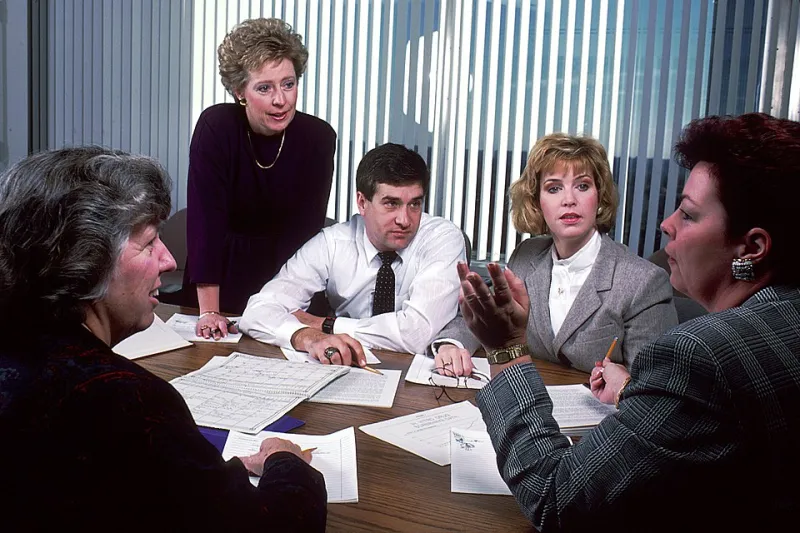
Photo: Bill Branson (Photographer), Public domain, via Wikimedia Commons
You're Not Bad at Remembering Names — You Were Never Actually Paying Attention When You Heard Them
Somewhere along the way, 'I'm terrible with names' became one of the most socially acceptable self-descriptions in America. People say it at networking events, at parties, at work orientations — sometimes almost proudly, as if it were a charming quirk rather than a solvable problem. It comes packaged with a shrug and a laugh, and everyone nods along because almost everyone feels the same way.
Here's what memory researchers want you to know: the people in that room almost certainly don't have a name memory problem. They have an introduction problem. And those are very different things.
Why Names Are Uniquely Slippery
Before getting into what goes wrong, it helps to understand why names are harder to remember than other information in the first place. This isn't imagined — names genuinely are more difficult for the brain to encode than faces, facts, or context. There's a specific cognitive reason for that.
When you learn that someone is a nurse, or that they grew up in Texas, or that they have a dog named Biscuit, your brain has something to work with. Those facts connect to existing networks of meaning — you already have mental hooks for what nurses do, what Texas is, what dogs are like. The new information links into a web of associations that makes retrieval more likely later.
Names, for most people, carry almost no inherent meaning. 'Michael' doesn't tell you anything about Michael. 'Jennifer' doesn't connect to a concept, a category, or a visual image the way 'firefighter' or 'marathon runner' would. The name is an arbitrary label attached to a person, and arbitrary labels are genuinely harder for memory systems to hold onto without extra effort.
Researchers call this the Baker/baker paradox, after a classic experiment: people shown a photo and told the person's occupation is a baker remember that detail far better than people told the person's last name is Baker. The word is identical. The memorability is not — because 'baker' plugs into a rich conceptual network, while 'Baker' as a surname is just a sound.
The Real Culprit: What's Happening in Those First Seconds
Knowing that names are harder to encode explains part of the problem. But it doesn't explain why so many people forget names almost immediately after hearing them — sometimes before the handshake is even finished.
For a memory to form, information has to be encoded in the first place. Encoding requires attention. And during most American introductions, the person being introduced is not paying attention to the name they're hearing.
Think about what's actually happening when you meet someone new. You're managing your own first impression — thinking about your handshake, your posture, whether you're making the right amount of eye contact. You're processing their face, their energy, their context. You might be in a loud room. You might be mid-conversation with someone else. You might be anxious about the event you're at, or mildly distracted by your phone, or simply on autopilot because you've shaken hands and said 'nice to meet you' forty times this year.
In that environment, the name arrives in your ears and never makes it to meaningful processing. It's not that your memory failed to store it. Your memory was never given the information to begin with.
Cognitive psychologist Richard Harris, who has studied name recall extensively, describes it this way: most people walk away from introductions with a memory of that a name was said rather than a memory of what the name was. The experience of forgetting feels like retrieval failure — like the name is there somewhere and you just can't reach it. But it was never encoded in the first place.
Social Anxiety Makes It Worse
For a significant portion of the population, introductions carry a layer of social pressure that makes the encoding problem even more acute. When you're nervous about making a good impression — whether at a first date, a job interview, or a party where you don't know many people — your cognitive resources are being heavily consumed by self-monitoring.
Researchers who study social anxiety and working memory have found that anxious individuals have measurably less cognitive bandwidth available for encoding new information during high-stakes social interactions. In plain terms: the more you're worried about how you're coming across, the less mental space you have to actually hear and process what someone is telling you.
This creates a painful irony. The situations where remembering someone's name matters most — professional events, important social gatherings — are often the situations where the conditions for encoding that name are worst.
The Design of American Introductions Is Part of the Problem
It's also worth stepping back and looking at the ritual itself. The standard American introduction is almost perfectly engineered to guarantee forgetting.
Two people meet. Names are exchanged simultaneously, or in rapid succession, often while hands are being shaken and faces are being processed and social scripts are being run. The whole exchange takes about three seconds. Then the conversation moves on to something else immediately, and the name — never repeated, never used, never connected to anything — begins its rapid fade.
In many other cultures, introductions involve more repetition, more ceremony, and more deliberate acknowledgment of the other person's name. In business settings in Japan, for instance, the exchange of business cards is treated as a formal act of recognition — the card is studied, acknowledged, and placed carefully rather than pocketed immediately. The name gets more processing time and more social weight.
American introductions prioritize efficiency and informality, which are genuinely good cultural values in many contexts. But they're genuinely bad for memory encoding.
What Actually Helps
The fix isn't complicated, but it does require a small shift in how you approach introductions.
Using the name immediately after hearing it — 'Good to meet you, Sarah' — forces active processing and gives the encoding process a second pass. Connecting the name to something visual or meaningful, even something slightly absurd, creates an associative hook. Asking a follow-up question that requires you to use the name again keeps it active in working memory long enough to consolidate.
None of this requires a special memory technique or unusual mental effort. It mostly requires deciding, before you walk into a room, that you're going to actually pay attention when someone tells you who they are.
The Takeaway
Being 'bad with names' is one of the most widespread self-diagnoses in America — and one of the least accurate. What most people are actually experiencing is the predictable result of an introduction ritual that doesn't give names a fair chance to be remembered. The memory isn't broken. The process is. And unlike your memory, the process is something you can change.